If Ireland, then here.
Between Wexford and East Cork, families find the Ireland they are really looking for: smaller towns, more affordable homes, good schools, the coast and a daily life that is still on a human scale.
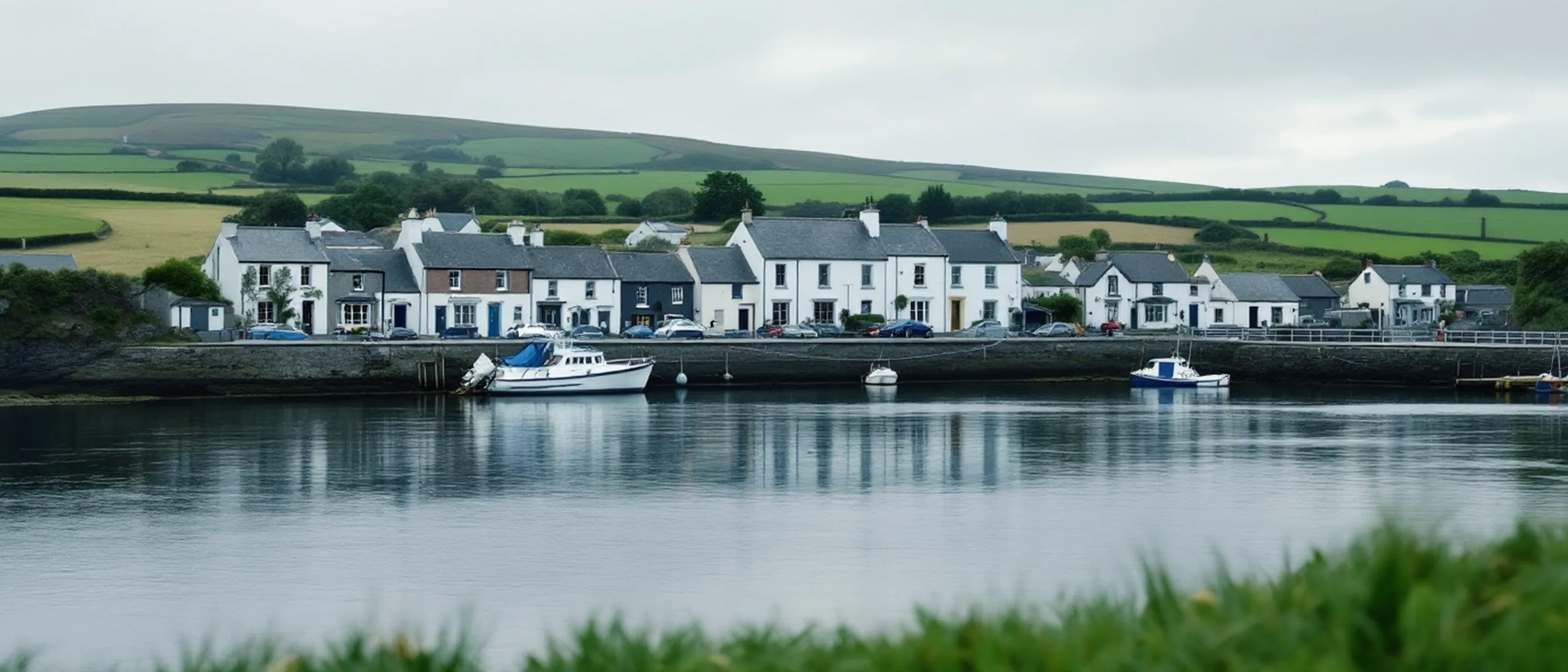
The priest came up to us on his bicycle. Unannounced. Then he sat there, drank tea and stayed for two hours.
That was 2014, in Lismore in County Waterford, a town of a little over a thousand people. I had moved there shortly before with six children. And somewhere between that afternoon and the Sunday roast in a gastropub run by a Texan couple, I understood what I am really looking for when I look for a place for my family.
Places where a person still turns up as a person.
Because once you have decided on Ireland, the next decision is only just beginning: where in Ireland should your family actually live? Everyone knows Dublin. Perhaps Cork as well. After that, for many families from Britain, the Netherlands or Scandinavia, the map empties surprisingly fast. You can move to the wild Atlantic coast, to Kerry, to Galway, to somewhere near Dublin, to a cottage somewhere in the midlands.
I would look in the South East again today.
By that I mean a fairly precisely defined part of the country: from Gorey and Wexford via Rosslare along the coast to Waterford and Dungarvan, on through Youghal to Cork and Kinsale, plus the river valleys inland around New Ross, Lismore, Fermoy and Mallow on the Blackwater.
The South East does not win on every single criterion, and it doesn't need to. Kilkenny is drier than Wexford. Carrick-on-Suir is cheaper. Carlow is closer to an airport. In the west you will find more dramatic landscapes, and Dublin beats the South East comfortably on flights. But a family does not live in a league table. It lives every day with the sum of its decisions: a house with room for the children, schools, doctors, shops, nature, people. Perhaps the sea on the doorstep. Within Ireland, less rain rather than more. And if the life you are leaving is in Britain or elsewhere in Europe, it is rather pleasant when the Continent stays within reach.
That is exactly why I keep ending up in the South East. The relatively dry side of Ireland is large. The part that is relatively dry, lies on the sea and at the same time has a car ferry to the European continent is small.
That is where I would look.
My experience of the South East
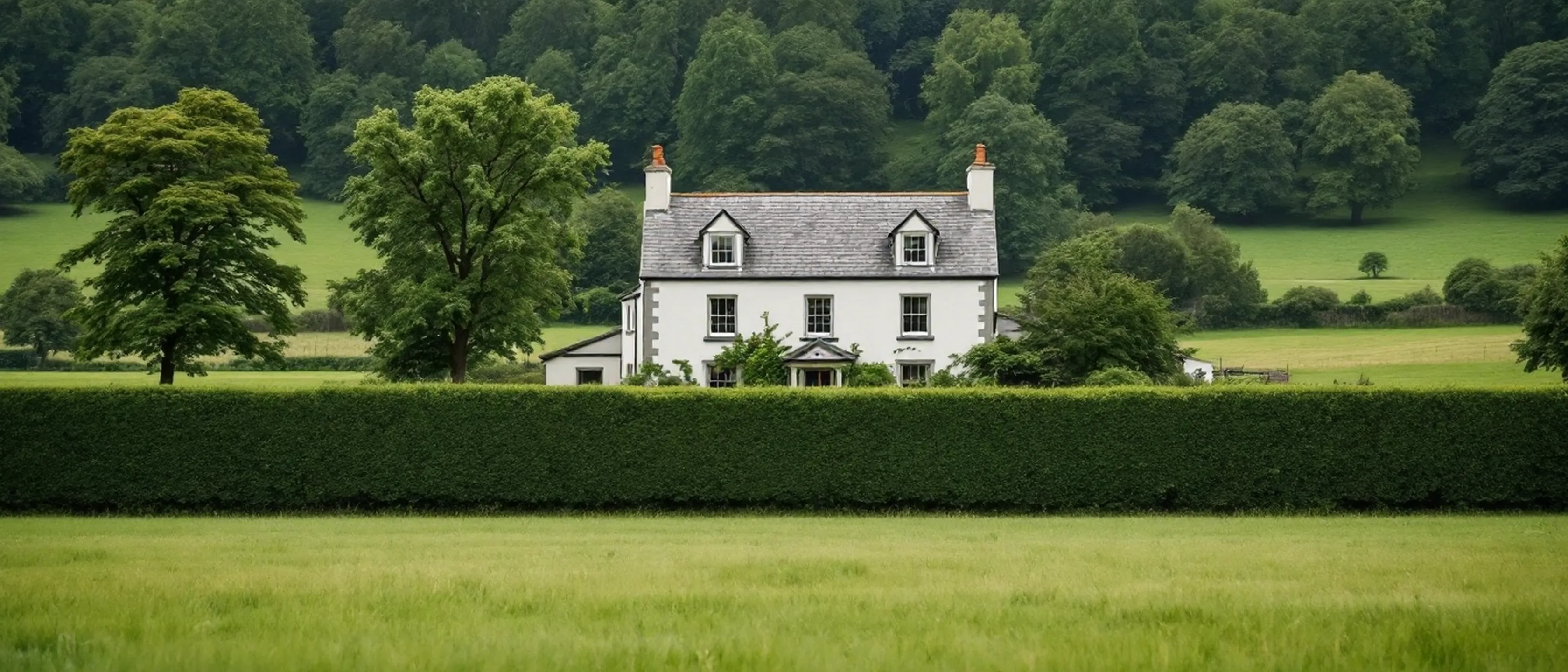
I did not discover this part of Ireland on Google Maps. I lived there with my children.
In August 2014 I moved to Ireland with six children. We had not chosen Lismore at a desk beforehand. We drove around Ireland in a hire car and looked at about a dozen houses. In the end we landed in an eighteenth-century Georgian country house on four acres of land.
And then everyday life began.
We had no car. There was one bus a day to Dungarvan. The nearest proper supermarket was about half an hour away, so the big shop was not something you set off for on a whim; you planned it. In the town we had our Centra, the butcher and the chipper. We had a housekeeper. We went walking through the countryside.
And people knew us. My children went to the local schools and were made welcome. Today that sounds almost like a story from another age. It was 2014.
That experience still shapes my idea of where I would want to live in Ireland. I don't need solitude, and I don't want to live somewhere where every little errand becomes an expedition. But I like places where people meet. Lismore showed me how this other scale of life feels.
Since then I have run the Ireland seminar in Cork twice. Today families I advise live in this region, and several have bought houses there. So I know both sides: the romantic idea and the Tuesday morning when the shopping has to be done.
Both are part of the decision.
What that year was really like, from the Georgian country house to the day we had to leave: my year in Lismore.
The drier Ireland
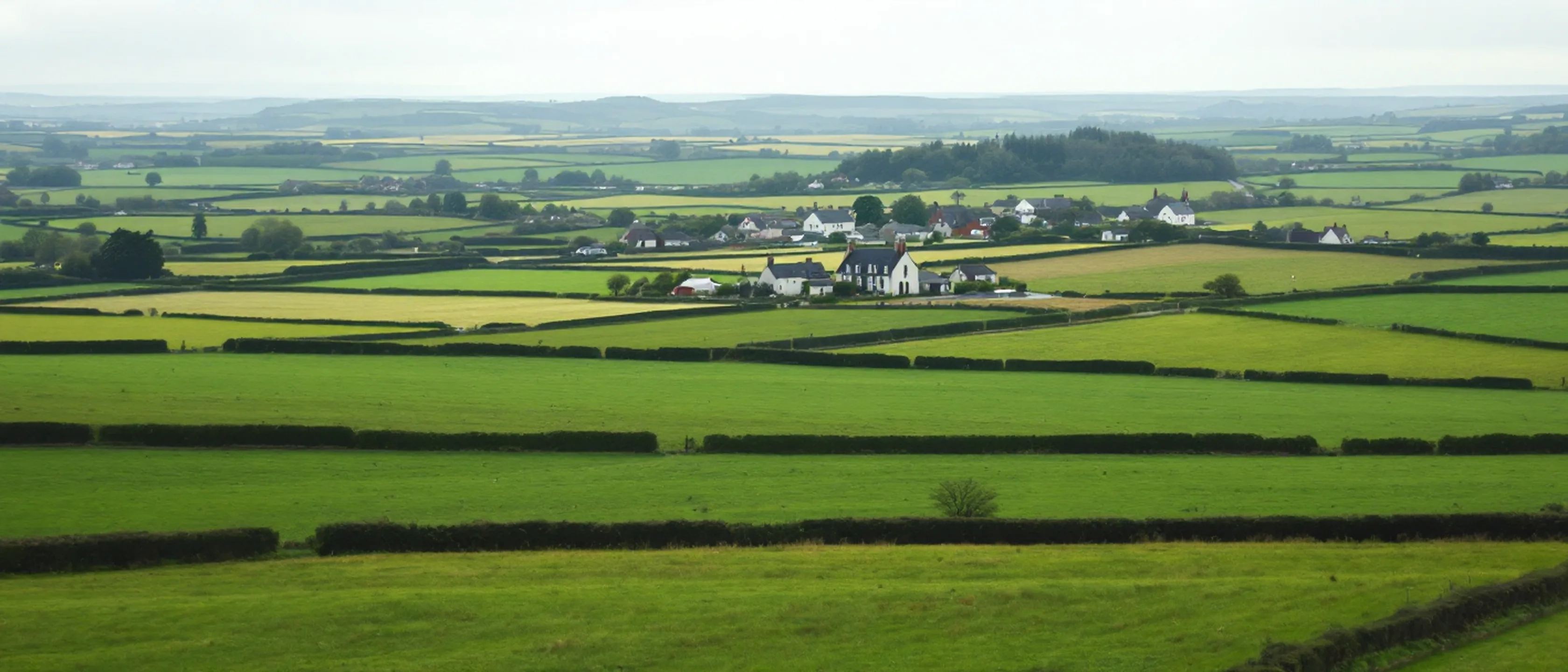
Ireland is still Ireland. It rains. Let's get that on the table straight away: if your idea of the perfect new home is three hundred days of sunshine, warm evenings and breakfast on the terrace in January, you should fly south, not to Ireland.
But within Ireland, where you live makes a considerable difference. Rosslare gets 880 millimetres of rain a year. Wexford is at 993 millimetres, Waterford at 1,008. The Irish national average is 1,288 millimetres.
And then it gets interesting: Bunclody is also in County Wexford, and there 1,305 millimetres fall. Bunclody is therefore even slightly wetter than the Irish average, while Rosslare, in the same county, is at 880 millimetres. That is why the county boundary only interests me up to a point when I look for a place to live. The micro-location counts, closeness to the coast counts, the actual spot counts. Twenty or thirty kilometres can change your everyday Ireland.
For me, rain is no trivial statistic. If you are on a fortnight's holiday, you can spend a rainy Wednesday in the pub. If you live there with your children, weather is everyday life. The dog has to go out. The children want to go out. You have a garden, you want to go to the sea.
That is why, in a country that is wet anyway, I would choose the drier part of my own accord.
| Place | Millimetres a year |
|---|---|
| Rosslare Harbour | 880 |
| Bridgetown | 926 |
| Dunmore East | 928 |
| Rosslare Strand | 939 |
| Ardmore | 964 |
| Wexford | 993 |
| Tramore | 1,003 |
| Waterford | 1,008 |
| Enniscorthy | 1,025 |
| Gorey | 1,044 |
| New Ross | 1,077 |
| Dungarvan | 1,123 |
| Lismore | 1,186 |
| Kilmacthomas | 1,204 |
| Youghal | 1,037 |
| Mallow | 1,067 |
| Fermoy | 1,073 |
| Cobh | 1,085 |
| Cork | 1,088 |
| Midleton | 1,107 |
| Carrigaline | 1,168 |
| Kinsale | 1,185 |
| Bunclody | 1,305 |
| Ireland, average | 1,288 |
| Galway | 1,285 |
| Westport | 1,453 |
| Killarney | 1,510 |
The rows in italics are for comparison: Bunclody lies in County Wexford, the others outside the region.
Source: Met Éireann, long-term averages 1991 to 2020, 1 km grid. As of: retrieved 22 and 23 August 2026.
The sea is part of everyday life
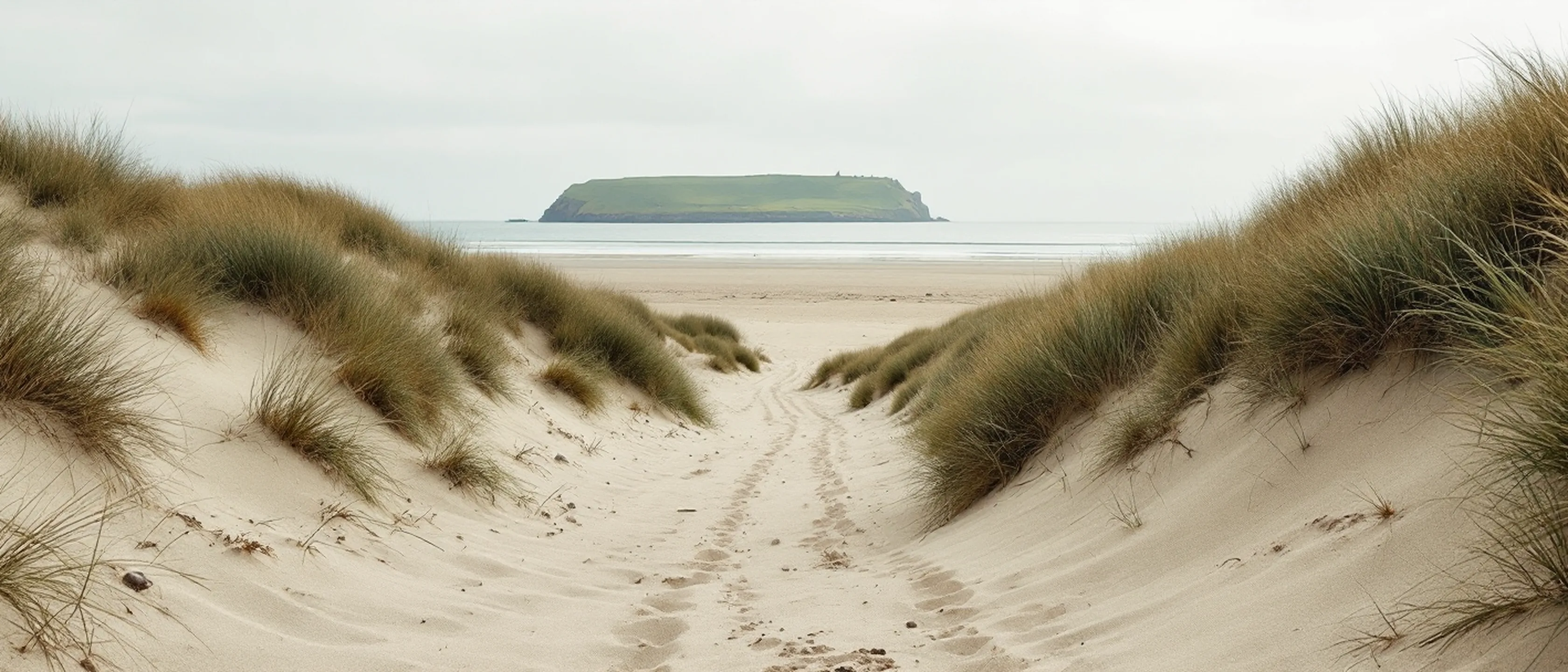
The second reason for where I draw my line is the coast. If the weather were all that mattered to me, I could look further inland. I don't want to. In Ireland I would want to live by the sea.
And in the South East that does not mean sitting somewhere in complete isolation on a dramatic Atlantic coast. You can combine the coast with ordinary family life. Wexford, Rosslare, Waterford, Tramore, the Copper Coast, Dungarvan, Ardmore. In between lie beaches, little coves, cliffs, harbours and coast roads. You can live a few minutes from the water and still reach a supermarket, a school and a doctor.
Ardmore is one of those places where you understand why the South East is more than a sensible choice of location. The village sits right on the sea, with a long beach and above it the cliffs of Ardmore Head and Ram Head. The Cliff Walk runs along the top of the coast, with the sea below you. On the way you pass St Declan’s Well, the old Coastguard Station, a Second World War lookout post and the wreck of the Samson.
And then you stand on those cliffs and look out over open water. With a little luck you will see dolphins out there. Or whales. The cliffs on the south coast are among the places where you can stand with binoculars and watch for them.
That is exactly the kind of detail that matters to me when I ask where to live. Your children can stand on the cliffs on a perfectly ordinary weekend looking for whales. Then you walk back into the village. Or go and eat: above the sea the Cliff House Hotel sits right on the cliffs, and Ardmore, of all things, has made a name for its food, which you might not expect from a small Irish coastal village.
For me that is the more interesting kind of quality of life. Not an abstract index. You go to the beach with the children, you walk over the cliffs, you look out for a whale, and in the evening you can eat superbly.
That is what a Saturday looks like.
Because at some point the move is over. Then you no longer photograph your home town every day. You live there.
Dungarvan and the Blackwater Valley
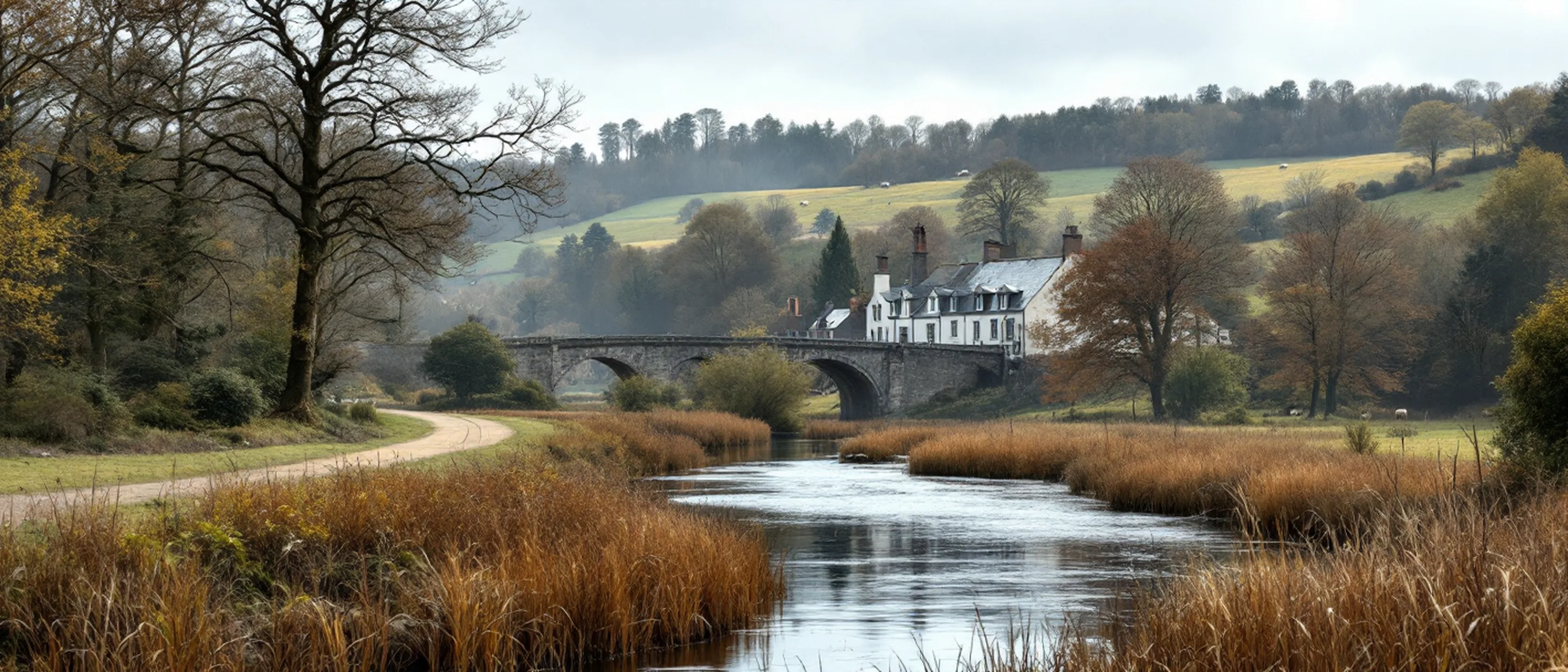
Dungarvan shows the same mix on a slightly bigger scale. West Waterford is no culinary no-man's-land: you have restaurants, pubs, local producers, the sea, and a landscape where a few minutes later you are back among fields and small villages.
For me, Dungarvan is therefore an important point on the map: you can live very rurally without your whole life having to become rural. I knew that from Lismore. In our town life was small, Centra, butcher, chipper, the big shop had to be planned. But Dungarvan was there. The coast was there. Cork was within reach. The world did not end at the town sign. That balance is exactly what I would look for again.
From the coast the region leads into the Blackwater Valley, and so into the part of Ireland where I lived myself. Lismore lies there. The River Blackwater runs through a green, old cultivated landscape of large estates, small villages and country roads.
And this of all areas is getting some rather prominent new neighbours. Mark Zuckerberg and Priscilla Chan have bought Strancally Castle in County Waterford. The estate lies on the Blackwater and covers 440 acres; its value is estimated at 20 to 30 million euros. And Zuckerberg is not the only billionaire landing in this small part of Ireland: James Dyson bought nearby Ballynatray House in 2024.
Of course that proves nothing at all. I would never say: two billionaires are buying houses, so you have to buy there too. Zuckerberg is looking for an estate with a budget that has little to do with the budget of an ordinary family.
What I find interesting is the geography. People who can afford a house practically anywhere in the world are landing in the Blackwater Valley. And I understand why. I was there long before them. Mine wasn't 440 acres, though. I had four. Plus six children. And one bus a day to Dungarvan.
That is probably the less glamorous version of the same choice of location. But that is exactly why I like the story: the Blackwater Valley works on completely different levels. You can own a castle there. You can live in Lismore. You can buy a family house outside a small village. And you always get the same landscape, the same small villages and the same closeness to the Waterford coast.
Small towns instead of a city
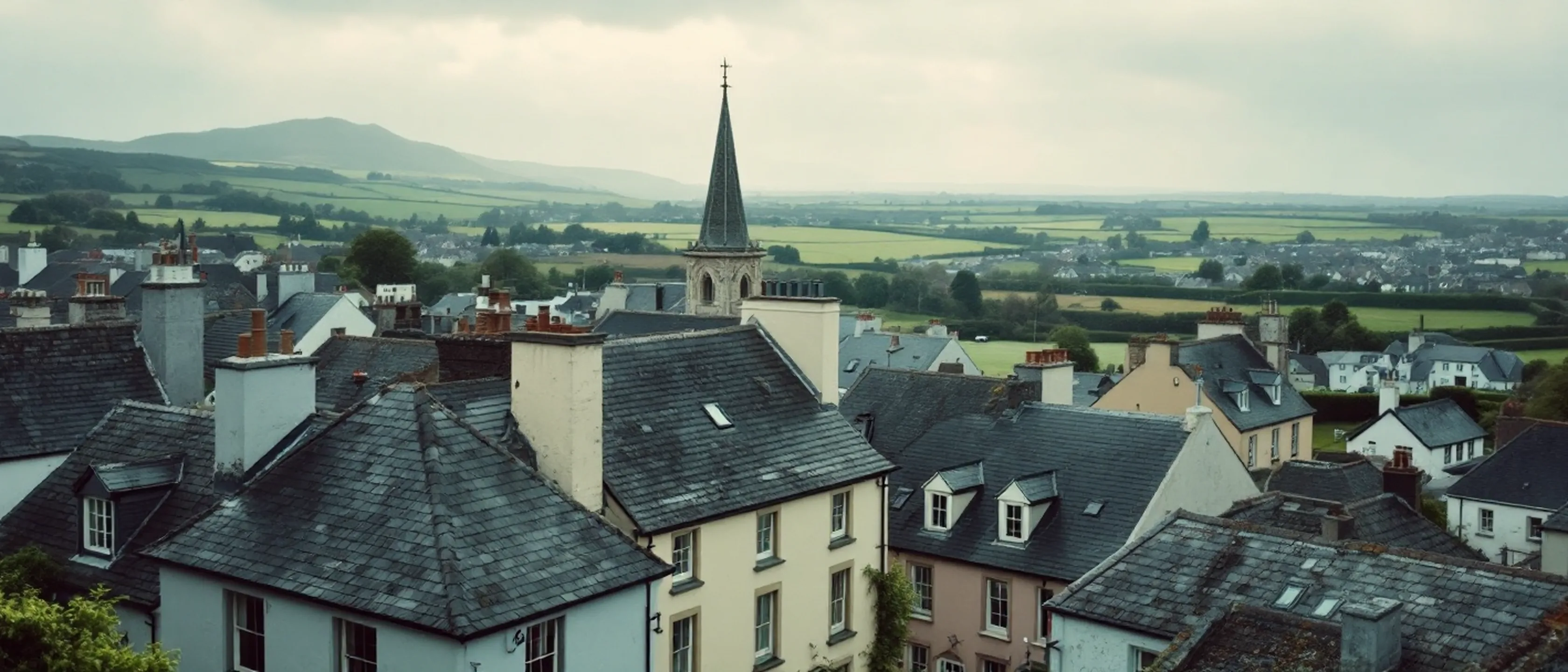
The scale of the South East has to suit you. Wexford has 21,524 inhabitants, Enniscorthy 12,310, New Ross 8,610. These are small places. Anyone coming from London, Manchester, Amsterdam, Copenhagen or Stockholm will notice the difference.
You get less choice. Not every one of your children's hobbies will be on offer five minutes away, you need a car for a lot of things, and some errands have to be planned. I lived the extreme version of that in Lismore.
But the same size has another side. People meet each other again. The school belongs to the town. The sports club belongs to the town. The butcher becomes your butcher at some point, and people know your children. That can feel unfamiliar to someone from a big city. For me it has become a selling point.
I would rather live in a place where my family is known than in a city where it stays a number.
| Town | Inhabitants |
|---|---|
| Wexford | 21,524 |
| Enniscorthy | 12,310 |
| Gorey | 11,517 |
| Tramore | 11,277 |
| New Ross | 8,610 |
Source: CSO, Census 2022, Profile 1. As of: retrieved 22 August 2026.
| Hospital | Town | Emergency department |
|---|---|---|
| University Hospital Waterford | Waterford | yes, for all age groups |
| Wexford General Hospital | Wexford | yes, for all age groups |
The hospitals in Cork city are not listed here.
Source: HSE, hospital and emergency department pages on hse.ie (University Hospital Waterford, Wexford General Hospital). As of: checked again 2 November 2026.
Houses in the South East
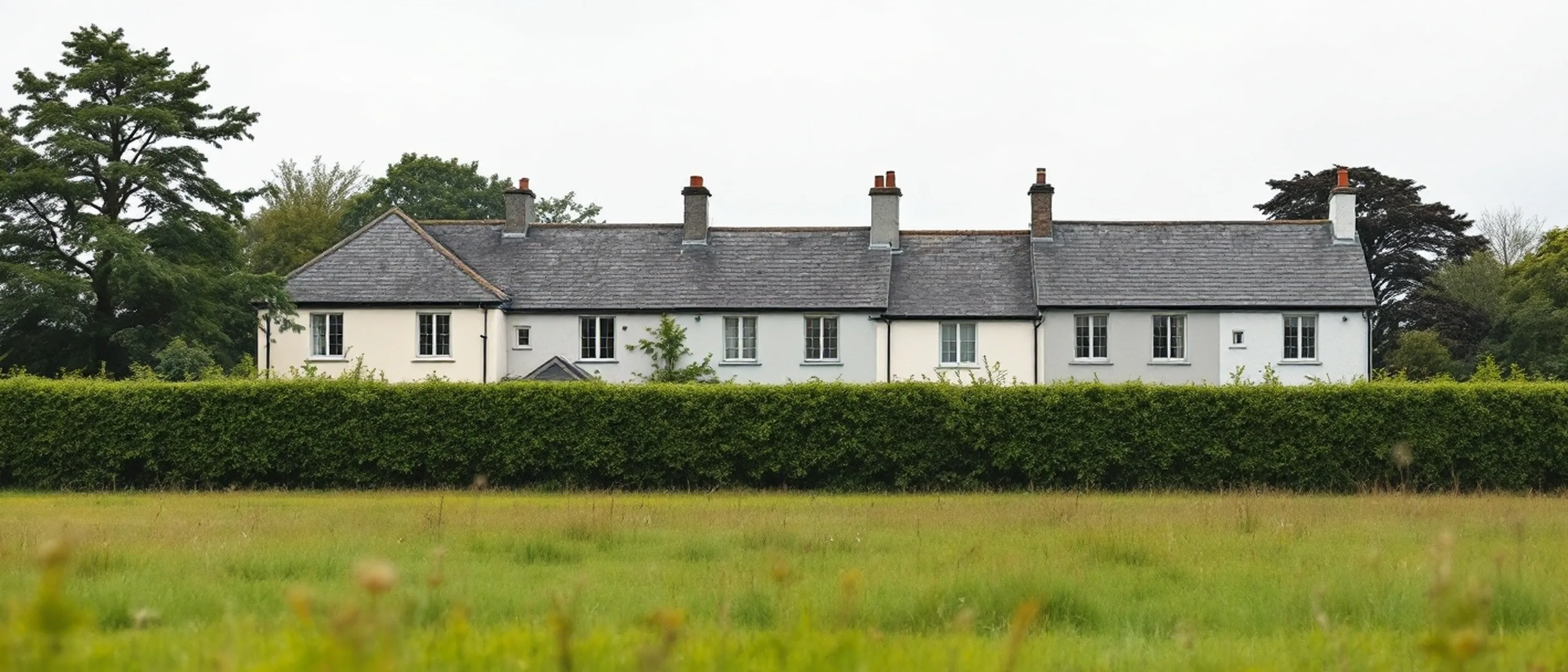
Ireland has a housing crisis, and it does not disappear because we like the South East. The rental market can be difficult, and good houses are not available without limit. Anyone who arrives expecting to view ten perfect properties on Friday and rent one of them on Monday may be in for an unpleasant surprise.
When you buy, the South East becomes more interesting. New Ross sits at a purchase price of €230,000; for existing homes in Waterford city the figure is €262,500. Gorey is a special case within our corridor, because the town already sits on the edge of the Dublin commuter belt. That is why I would never name a single price for the whole South East. Location changes the price just as much as the house itself.
But that opens up options for families with capital. You can decide whether you want to be closer to the sea, whether you want more land, whether you want to live in a town or are looking for a small village, whether Rosslare matters especially, or whether you would rather go further west towards Dungarvan, Ardmore and the Blackwater.
The property follows your life. I think that order is decisive.
| District | All properties | Existing homes only | Sales in twelve months |
|---|---|---|---|
| New Ross | €230,000 | €230,000 | 187 |
| Enniscorthy | €300,000 | €265,000 | 449 |
| Kilmacthomas | €300,000 | €262,000 | 46 too few |
| Dungarvan | €318,500 | €317,250 | 159 |
| Wexford | €320,000 | €285,000 | 715 |
| Waterford | €327,232 | €262,500 | 1,228 |
| Gorey Dublin commuter belt | €350,034 | €313,500 | 517 |
| Youghal | €294,500 | €285,000 | 149 |
| Mallow | €275,000 | €260,000 | 495 |
| Cobh | €335,000 | €330,000 | 132 |
| Fermoy | €385,000 | €266,250 | 226 |
| Cork northside | €380,000 | €301,000 | 783 |
| Cork southside above the national median | €417,000 | €400,000 | 1,493 |
| Glanmire above the national median | €399,999 | €382,000 | 264 |
| Midleton above the national median | €420,000 | €348,000 | 576 |
| Carrigaline above the national median | €420,000 | €414,500 | 295 |
| Kinsale above the national median | €490,000 | €502,500 | 157 |
| Ireland overall | €396,000 | €364,000 | |
| Dublin | €500,000 | €494,500 |
The right-hand column shows how robust the median beside it is.
Source: CSO, tables HPM08 and HPM04, rolling 12-month median. As of: June 2026, retrieved 22 and 23 August 2026, confirmed 26 August 2026.
Rosslare links Ireland to the Continent
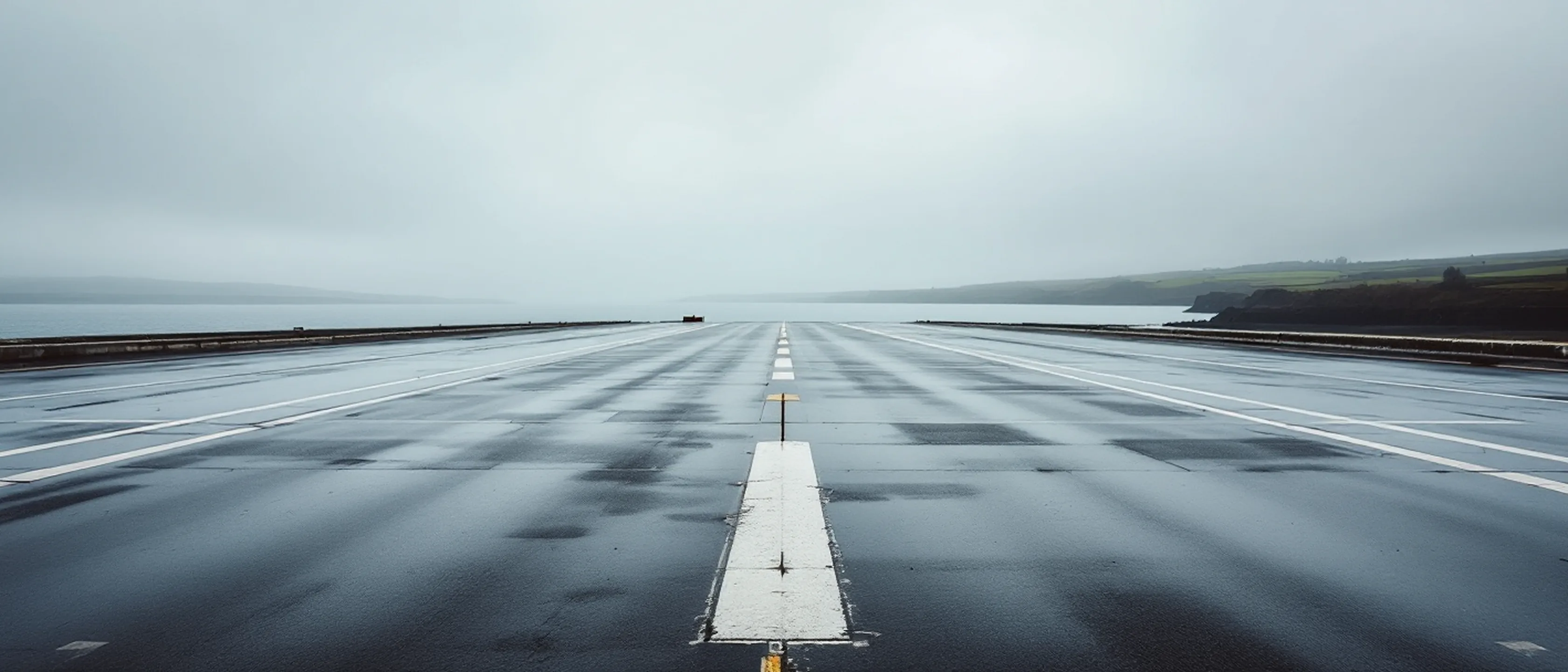
Then comes the advantage of location that no pretty place inland can replace: Rosslare Europort.
DFDS sails from Rosslare straight to Dunkirk. Cars can come, camper vans can come. You drive onto a ferry in Ireland and drive off on the European continent in your own vehicle. Dunkirk sits on the Belgian border, and from there you drive on.
For a family from the Netherlands, Belgium or Scandinavia, that is something quite different from a flight, and for a British family Fishguard and Pembroke Dock are only a few hours across the Irish Sea. You can load the car when you move. You can travel with a dog, take the bikes, drive a camper van. You do not have to reduce your life to hold luggage.
Ireland remains an island, but Rosslare changes what being an island means in practice. You may not notice it on your first holiday. You notice it when you live there.
| Destination | Country | Operator | Frequency |
|---|---|---|---|
| Dunkirk | France | DFDS | see the DFDS timetable |
| Cherbourg | France | Brittany Ferries | five sailings a week, 17 hours |
| Fishguard | Wales | Stena Line | several times a day, just over three hours |
| Pembroke Dock | Wales | Irish Ferries | several times a day, about four hours |
| Bilbao | Spain | Brittany Ferries | two round trips a week, 26 hours |
Every row was checked with the operator, not taken from the port's route map.
Source: Each operator checked separately (Stena Line route list, DFDS, Brittany Ferries, Irish Ferries); destinations and crossing times Rosslare Europort. As of: retrieved 22 August 2026, Dunkirk checked again 17 September 2026.
The catch: flying beyond Britain
The South East has one clear weakness, and I would never hide it: flights beyond Britain.
To Britain, Cork is well served: London Heathrow, Gatwick and Stansted and Manchester every day, and a handful of other British airports several days a week or more. Further afield it thins out. Amsterdam has a daily KLM flight, Brussels is served from Charleroi two or three times a week, and Scandinavia has no direct flight at all. Anyone who flies to the Nordics or around the Continent often will therefore use Dublin regularly, and depending on where you live that means roughly ninety minutes to two and a half hours in the car.
If you fly to Copenhagen on Monday, come back on Tuesday and have to be in Stockholm again by Thursday, I would probably not recommend the South East to you. At some point you will hate the drive to Dublin. That is the price of this region.
It works better for a family that really moves to Ireland. If the centre of your life stays in Britain or on the Continent and Ireland is mainly meant to be your new address, there are more practical places. But if your life really moves to Ireland, the sums change. Then most days are not travel days. Then what counts is how your life feels on all the other days.
| Destination | Airline | Frequency |
|---|---|---|
| London Heathrow | Aer Lingus | daily |
| London Gatwick | Ryanair | daily |
| London Stansted | Ryanair | daily |
| Manchester | Ryanair | daily |
| Edinburgh | Ryanair | five days a week in winter |
| Amsterdam Schiphol | KLM | daily |
| Brussels Charleroi | Ryanair | two or three times a week |
| Copenhagen, Stockholm, Oslo, Helsinki | none | no direct flight |
Source: Cork Airport, flight schedule winter 2026/27 (corkairport.com). As of: retrieved 6 November 2026.
The region stretches between its two gateways: Rosslare Europort in the east, Cork Airport in the west. No town in the region is more than 80 minutes from one of the two.
| Town | Rosslare Europort | Cork Airport | Dublin Airport |
|---|---|---|---|
| Rosslare Strand | 11 min | 160 min | 121 min |
| Wexford | 19 min | 151 min | 112 min |
| Enniscorthy | 33 min | 148 min | 97 min |
| New Ross | 44 min | 124 min | 122 min |
| Gorey | 53 min | 171 min | 76 min |
| Waterford | 64 min | 111 min | 118 min |
| Tramore | 76 min | 112 min | 129 min |
| Kilmacthomas | 79 min | 89 min | 132 min |
| Dungarvan | 96 min | 67 min | 149 min |
| Lismore | 114 min | 57 min | 165 min |
| Ardmore | 116 min | 56 min | 169 min |
| Youghal | 122 min | 48 min | 179 min |
| Fermoy | 140 min | 37 min | 155 min |
| Midleton | 142 min | 25 min | 185 min |
| Cobh | 159 min | 34 min | 189 min |
| Cork | 161 min | 11 min | 181 min |
| Mallow | 163 min | 40 min | 173 min |
| Carrigaline | 164 min | 13 min | 184 min |
| Kinsale | 183 min | 22 min | 203 min |
Source: OSRM, routing over the open road network. A model, not a timetable. As of: retrieved 22 and 23 August 2026.
The South East wins on the combination
For almost every single criterion there is a place in Ireland that beats the South East. That doesn't bother me in the least. I am not looking for the driest place, not for the cheapest house, not for the shortest trip to the airport and not for the most dramatic cliff.
I am looking for the place where as many things as possible work at the same time. A relatively dry Irish climate. The sea. Small towns where everyday life works. Property that stays interesting for a family with capital. Waterford and Dungarvan. Ardmore with its beach and its cliffs. The Blackwater Valley. Rosslare and the direct link to the Continent. And a scale at which children can still grow up in a place that knows them.
For that I accept the poorer flight connections. I accept that I need a car and that some things are further away. After all, I know pretty exactly how those drawbacks feel: I had six children, no car and one bus a day.
And still I think of this part of Ireland today and would look there again. Perhaps not exactly the same house again. Perhaps not exactly Lismore again. But the same region.
Because the real question is not which part of Ireland wins on a postcard. The question is where you want to see your children grow up. Where you drive with them on a Saturday morning. Where you do your shopping. Where you walk the dog. Where you go out to eat on Sundays. Where someone knows your children by name. And where, on a free afternoon, you can stand on a cliff in Ardmore and look for whales with them.
For me, the search for that life begins in the South East of Ireland.
Advice on choosing where to live
Once Ireland has become concrete for your family, I would plan your future life first and choose the point on the map afterwards.
How old are your children? School or home education? How often do you need to be back in Britain or on the Continent? Do you want to buy, or rent first? Would you like to live in a town or with land? How important is the sea to you? How much driving do you want in daily life? Do you need Cork Airport regularly? How important is Rosslare?
I can give you my own experience of life with six children in Lismore just as much as my experience today with families who live in the South East and have bought property there.
By the end you should know whether this part of Ireland suits your family and which places we should look at concretely for your new life.
Two families, two roads here
What this area feels like when you actually live here is told in two stories on this site. Sebastian lived in Lismore in County Waterford as a single father. And Marc Vogler came here with his wife and four children for a year out, had their fifth child in Ireland and stayed; today the family lives near Enniscorthy.
And why not Dublin?
First, the reason that lies beneath the choice of place and is seldom spoken: in Ireland everyday life is decided one level further down than at home, and in a small town you notice it daily. Smaller state, closer community.
The question comes up in almost every conversation, and it deserves an answer of its own without shortcuts: Why not Dublin.
And what life in a small town in this region really feels like, with everything that can go wrong: my year in Lismore.