When it comes to your children, hope is not a plan.
I never want to have to explain to my children why I saw the signs and stayed anyway, until the decision was no longer ours to make.
Straight to the topics:NeutralityNot in NATOOn the edge of EuropeThe limits of neutrality

I left Germany in 2000.
Since then I have raised children in Switzerland, the United Kingdom, the USA, Malta, Ireland and Scotland. So for more than 25 years I have been asking myself the same question: in which country do I want to see my children grow up?
It used to be about opportunities. About schools. Language. Freedom. Quality of life. About which doors a country opens to a young person.
Today many parents have another question on top, and it is a far more uncomfortable one.
What happens to my son if Europe starts registering its young men for a possible war again?
This question is rarely spoken over dinner. People talk about property. Taxes. Perhaps a second passport. They say they want to become “more flexible” or have a “plan B”.
But when your own son is 12, 14 or 16, a very simple fear can stand behind all these sensible words.
I do not want someone else to decide one day whether my son has to go to war.
That is not a comfortable motive for a move. But I consider it a legitimate one. And by now I consider it too important to pretend it is merely an abstract political debate.
Europe is registering young men again
Take Germany, the country I left. Conscription there was suspended in 2011. It was never abolished.
Since the start of 2026, 18-year-old men and women have again been receiving a questionnaire from the Bundeswehr. Men have to answer it. From 1 July 2027, men born in 2008 are to undergo compulsory screening for service. Even those who want to refuse military service must attend.
The new military service is voluntary for now. That has to be said clearly, too. Today no 18-year-old is automatically called up for basic service by this system alone.
But the law contains a mechanism for what is called conscription on demand. If the security situation worsens or not enough volunteers come forward, compulsory call-up can be decided politically.
And it is not only Germany. In Sweden, everyone who lives in the country is subject to the total defence duty from the year they turn 16 to the year they turn 70, and young people are called to mönstring, the enrolment for service.
Source for Sweden: Plikt- och prövningsverket, Totalförsvarsplikt och krigsplaceringar, and Mönstringsboken for those born in 2008 (pliktverket.se). As of: retrieved 6 November 2026.
So for me, what applies this morning is less interesting. What interests me is the direction.
Registration is back.
The compulsory screening of an entire year group has been decided.
The mechanism for a later compulsory call-up exists.
And all of this is happening against a background nobody can miss. The war in Ukraine has now lasted for years, and Europe is rearming. Defence spending is rising. Troop numbers are to rise. Military capabilities are to grow. Words like “war-ready” have returned to public language.
You can consider all of that geopolitically necessary. As a father, I may still ask a different question.
What does this development mean for my own children?
The passport is where it becomes concrete for me

I read one provision of the German Passport Act differently today than I did a few years ago.
Section 7 of the German Passport Act sets out grounds on which a German passport can be refused. Men liable for military service are named there expressly.
The law names a man liable for service, from a year group whose registration has begun, who wants to leave Germany for more than three months without the permission required under the Military Service Act. It contains further provisions for men liable for service who want to leave Germany without a required permission. And instead of refusing a passport outright, the law also allows its territorial validity or its period of validity to be restricted.
I am not claiming that Germany will take passports away from young men en masse tomorrow. That would be dishonest. Military service obligations are also, as a rule, suspended for as long as a man liable for service has his permanent residence and his livelihood abroad and meets the legal conditions for it.
But for me the decisive point remains.
The legal possibility of restricting a conscript’s departure through passport law already exists. It does not have to be invented after a major European war has begun. It is in the statute book.
Legal status of the German information: 23 August 2026, checked against the consolidated texts (Military Service Modernisation Act, in force since 1 January 2026; § 7 of the Passport Act unchanged).
And when I think about a plan B as a father, this is exactly the difference that interests me.
Which decision can I still take myself today, while it is still mine?
What makes Ireland a different place
I am not looking for a state that promises me nothing will ever happen. That country does not exist.
I am looking for a starting position. How did a country decide when it had the choice? Which alliances did it join? Which not? And what decision did a country take before my family might one day urgently need it?
With these questions, Ireland becomes interesting. Because here things come together that are hard to find a second time in this combination in Europe.
Ireland is not in NATO. The Irish government describes its traditional policy of military neutrality as non-membership of military alliances and non-participation in common or mutual defence arrangements.
Ireland has no conscription. An Irish teenager today does not grow up with a system that registers his year group, screens him compulsorily and keeps a legal mechanism ready for a later call-up on demand.
Ireland lies on the western edge of Europe. Behind it lies the Atlantic. If you come from the Low Countries or Scandinavia, you feel this difference at the first glance at the map. Europe’s great land borders are far away. Ukraine is far away. The Baltic states are far away.
And on this island there is nothing an attacker would have to knock out first. No alliance makes Ireland a target, and I see no military installations here that would be of strategic interest to an adversary.
Then there is daily life, so often forgotten in this discussion: crime is low. Children can go to school here, speak English, make friends, live by the sea and lead a normal life. A safe harbour you would not want to live in would be no safe harbour.
| Since | |
|---|---|
| NATO | not a member |
| NATO Partnership for Peace | 1999 |
| EU PESCO | 2017 |
Source: Bunreacht na hÉireann, Articles 28 and 29; Oireachtas debates 2022 and 2023; RTÉ and The Irish Times, 1 and 9 June 2026; Department of Defence press release. As of: as of 22 August 2026; the bill was not in force on that date.
None of this is a security guarantee. Alliance status, conscription and geography are three things I would not ignore. But I would not look at them one by one either. Once again it is the combination that counts.
And honesty also means saying this: Ireland does not solve every problem a family from Britain or the Continent may have. It is expensive. It rains. The housing market is difficult. Income tax can be high.
Where Ireland stands in the peace index
A ranking does not replace judgement, but it puts a feeling into proportion. Every year the Global Peace Index measures how peaceful a country is at home and abroad; the 2026 edition covers 163 countries.
Ireland ranks fifth, with a score of 1.371, among the five most peaceful countries in the world. A lower score means a more peaceful country. For a family that is asking this question at all, that is the solid part.
And Switzerland ranks ahead of Ireland, in third place with 1.363. We write that because it is true. If you decide the security question by this ranking alone, you end up in Switzerland and not in Ireland. The reason families still move to Ireland is not in this line, but in the sum of language, schooling law, house prices and non-alignment.
Source: Institute for Economics and Peace, Global Peace Index 2026. As of: retrieved 17 September 2026.
What Irish neutrality really means
Now comes the part I would never gloss over.
Irish neutrality is not written into the Constitution as an unchangeable requirement. Article 28.3.1 of the Irish Constitution provides for something else: Ireland may not declare war or take part in any war without the assent of Dáil Éireann, the Irish parliament.
That is parliamentary control over taking part in war. It is not a constitutional clause that binds every future government for all time to today’s policy of neutrality.
In 2022 a bill lay before the Irish parliament that was meant to change exactly that. The Thirty-ninth Amendment of the Constitution (Neutrality) Bill 2022 was to open the way to a referendum to write neutrality expressly into the Constitution. The proposal did not get through.
For me that means: I cannot sell a client a constitutionally guaranteed Irish neutrality. It does not exist.
Ireland’s military neutrality is policy. Policy can change.
Neutral also does not mean isolated. Ireland has been a member of NATO’s Partnership for Peace since 1999; the Irish government expressly describes this cooperation as a partnership with NATO, among other things to improve the interoperability of the Irish Defence Forces on international missions. Since 2017 Ireland has also taken part in PESCO, the European Union’s Permanent Structured Cooperation in defence. Irish soldiers take part in international peacekeeping missions.
But cooperation has so far not automatically meant joining an alliance. The country cooperates without being a NATO member. And the Irish government continues to state expressly that it holds to the policy of military neutrality.
That is no guarantee for tomorrow. But it is a record of decisions. I do not judge a country by what it promises once the crisis is already here. I look at the position it took while it could still choose.
| Basis | What it says | Rank |
|---|---|---|
| Article 28.3.1° | War only with the assent of Dáil Éireann. That is parliamentary control over going to war, not neutrality. | Constitution |
| Article 29 | Exemption from a common EU defence. The exact subsection number has been renumbered several times and has not been checked against the constitutional text here. | Constitution |
| Triple Lock | a government decision, a resolution of the Dáil and a mandate of the UN Security Council | ordinary statute, not constitutional law |
Source: Bunreacht na hÉireann, Articles 28 and 29; Oireachtas debates 2022 and 2023; RTÉ and The Irish Times, 1 and 9 June 2026; Department of Defence press release. As of: as of 22 August 2026; the bill was not in force on that date.
The Triple Lock is being changed
The best proof that Irish neutrality policy can move lies right in front of us.
Until now, certain larger deployments of the Irish Defence Forces abroad have been subject to the so-called Triple Lock. It ties together three levels: the decision of the Irish government, the assent of the Dáil and a mandate from the United Nations. This construction is ordinary law. It does not stand above parliament.
The Irish government wants to change it. On 9 June 2026 the Minister for Defence confirmed that the cabinet had approved the Defence (Amendment) Bill 2026 and that the bill was to go through the parliamentary process. The central planned step is removing the requirement for a mandate of the UN Security Council.
As of the state we are speaking about here, this change cannot simply be equated with law in force. But the political direction is real.
The government justifies the reform by saying that a permanent member of the UN Security Council should not be able to decide by its veto whether Ireland takes part in an international peace mission. You can find this reasoning sensible. You can reject it.
For my decision as a father, something else matters first: one of the concrete legal safeguards that have shaped Ireland’s military restraint is being renegotiated politically right now. That belongs in any honest assessment of Ireland.
| What it does | removes the requirement for a UN Security Council mandate |
| Cabinet approval | June 2026 |
| Intended commencement | 2026 |
| As of 22 August 2026 | not in force |
Source: Bunreacht na hÉireann, Articles 28 and 29; Oireachtas debates 2022 and 2023; RTÉ and The Irish Times, 1 and 9 June 2026; Department of Defence press release. As of: as of 22 August 2026; the bill was not in force on that date.
A safe harbour is not a promise
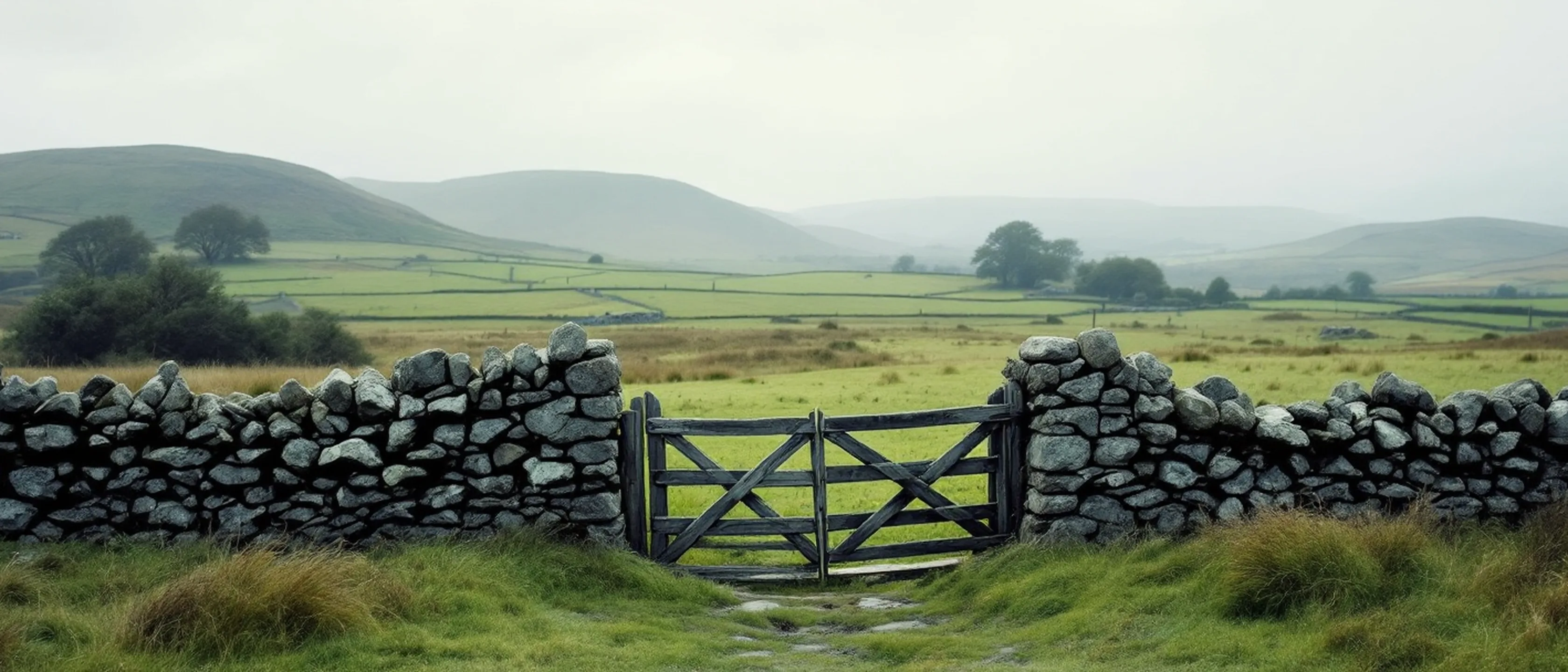
The term “safe harbour” is dangerous if you take it as a guarantee.
Ireland has no neutrality enshrined for ever in its Constitution. The Triple Lock is being changed. Ireland cooperates with NATO through Partnership for Peace. Ireland takes part in PESCO. Ireland is part of the European Union and so does not simply escape all European obligations either.
Geography does not prevent war. Missiles care nothing for romantic notions of islands. Nor do cyberattacks. Ireland can be drawn into a European crisis, economically, politically and in terms of security.
That is why I would never say: move to Ireland, you will be safe there. Nobody can promise you that. And nobody knows how Europe will have changed in ten years.
Still, I would rather plan with this truth than with a beautiful lie. Because I do not need a state for my family that promises me eternal security.
I need options, while options can still be built.
A place of residence can be one such option. A second centre of life can be one. And at some point a second citizenship can be one, too.
And there is something else that belongs here, which sounds smaller and is bigger in daily life: in Ireland the state sits one level further away, and the community carries the day. Smaller state, closer community.
But all these things have one thing in common. They need time.
The most important decision comes before the crisis

A plan B is almost worthless if you only start it after you need it.
That is the point I keep seeing after 25 years outside Germany. As long as everything is calm, a second home seems excessive. A second passport seems unnecessary. A move seems radical.
Then something changes. And suddenly everyone wants to use the same door at the same time.
That is exactly when a theoretical option becomes a practical question.
Can you leave?
Are you allowed to leave?
Where can you go?
May your children live there?
How long until they are really rooted there?
Which citizenship can they get later?
These are not questions I want to answer only once my son has a letter about his call-up screening lying on the table.
I want to know the answer beforehand. That is what I understand by taking precautions.
I have made this decision for my children before
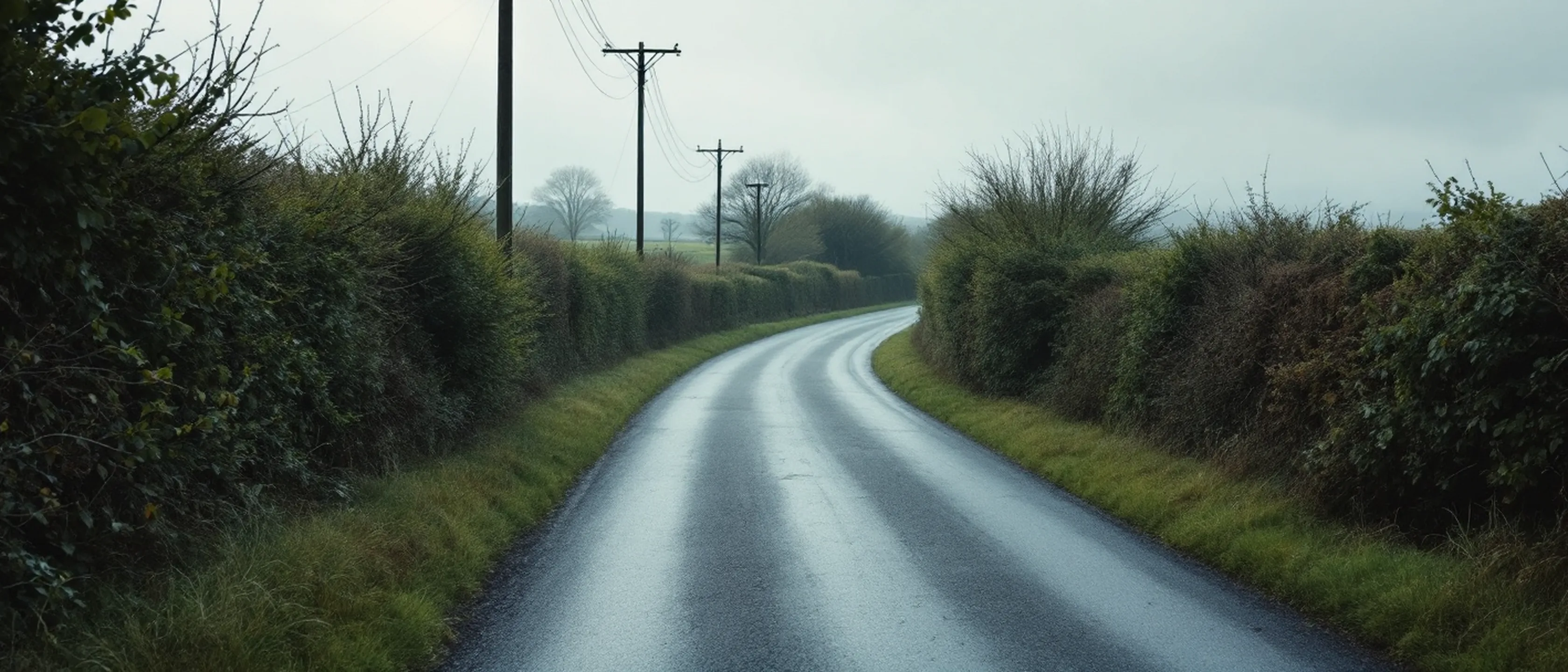
In 2014 I moved to Ireland with six children. We lived in Lismore in County Waterford. My children went to the local schools there. We lived in the countryside, in a Georgian house on four acres.
It was sometimes impractical. It was sometimes wet. It was very far from the life many people on the Continent consider normal.
But I loved watching my children grow up there.
For me, with all the laws, alliances and political developments, this is the point where theory ends. I know Ireland as a father. I know life there with children. And I know the question many parents are asking themselves right now, because I have been asking it of myself for decades.
Where do I want to be when Europe one day looks different from today?
My answer does not have to be yours. But I believe you should have one. Before you urgently need it.
Advice on your plan for Ireland
If you are looking at Ireland for exactly these reasons right now, we can think your situation through together. Not with a promise that Ireland will stay safe, neutral or unchanged for ever.
We look at your family, your children’s ages, where you live today, your citizenships, your financial position and which options you can actually build.
Then you know whether Ireland is a realistic plan for your family and what you would have to do today so that this option really exists later.