We meant to take a year out. We ended up finding a new home.
Marc Vogler came to Ireland with his wife and four children for one year. Today the family lives near Enniscorthy, six of them plus a son born here. This is his story, in his own words.
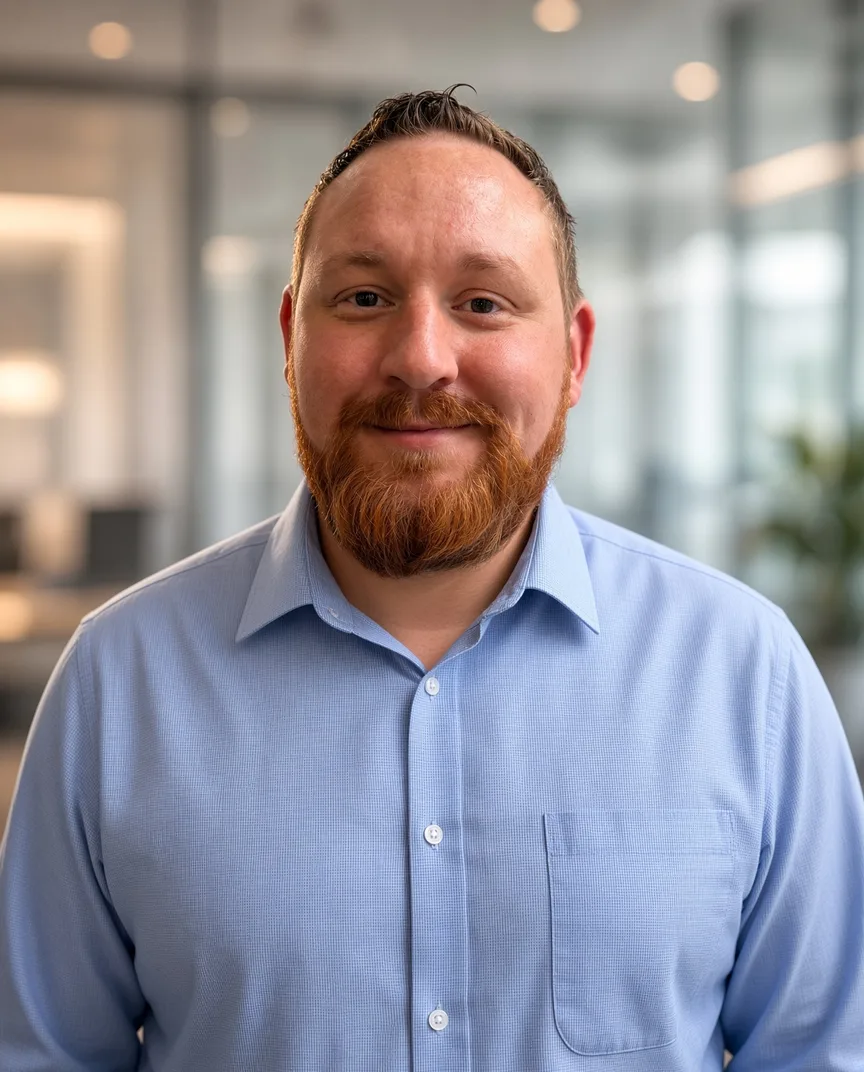
When I think today about how our story in Ireland began, I sometimes have to marvel a little myself. All we really wanted was a break: one year out of everyday life, more time as a family, travelling and discovering a bit of the world. That we would find a new home in Ireland along the way was not the plan at all.
I am Marc Vogler, 37 years old, originally from the Wendland in Lower Saxony, and today I live with my wife Janine and our five children in the South East of Ireland. But before I tell you about Ireland, I have to go back a little. Because the decision to change our life did not come from a sudden urge to travel. It has a lot to do with a time that shaped us deeply as a family.
The time that changed everything
One of our daughters had bone cancer.
When your own child gets a diagnosis like that, the way you look at life changes. From one day to the next, things take on a different meaning. What seemed important yesterday moves far into the background. Work appointments, plans, money, career: all of it becomes secondary when you are sitting next to your child and all you wish for is that she gets well again.
As a father in a situation like that, you desperately want to do something. You want to protect your child, take away her fear, and if you could, carry the illness yourself. But you can't. You can only be there. Be strong, even when you sometimes don't feel strong at all. For her, for her brothers and sisters, for Janine.
That time cost my wife a great deal of strength. Our daughter came through the illness in the end, and we are endlessly grateful for that to this day. But that time did something to all of us. It reminded us that we do not have endless time, and that at some point we have to ask ourselves how we actually want to spend it.
Work here, family there
I had to face that question too. Back then I had a good job as a sales director, a lot of responsibility, and I was successful in my career. I was always someone who likes to plan and get things done: set goals, find solutions, keep going. Even in my free time my mind was often already on the next project. For a long time I enjoyed that.
But there was another side of me too, the family man. I love being there for my wife and my children, spending time with them, answering their questions, passing on knowledge and values and watching them develop their own personalities.
At some point I noticed that I was constantly doing the splits between these two sides. Work here, family there. The next goal here, a child there who really just wanted to spend a little time with his dad. More and more I had the feeling that I had to choose, and that was exactly what I no longer wanted. I didn't want to look back on my life one day and realise that I had achieved a lot in my career but too often missed the important moments of my children's lives.
So Janine and I made a decision that seemed both brave and a little mad to us at the time: we would take a break. A whole year.
A year of preparation, a year on the road
It wasn't easy. For a year we prepared, planned, calculated and organised. We had to talk to employers, sort out the finances, bring the schools on board and prepare our family for this unusual step. It was an incredible amount of work. But eventually the time came.
In autumn 2024 we came to Ireland for the first time, a week in Kerry, quite classically as tourists. We liked the country straight away: the landscape, the sea, the people. But at that point Ireland was not yet home. Our journey went on.
Then came two completely different worlds. On Zanzibar we found exactly what you long for after all that preparation: dream beaches, warm sea, snorkelling, sun and above all peace. And then the USA, a road trip through a country that overwhelms you again and again with its size and its contrasts. Los Angeles, Las Vegas, Texas, Florida and New York, with endless roads in between and new impressions every day. Loud, big, spectacular, and completely different from Zanzibar.
And then this journey gave us something we had not counted on: Janine became pregnant.
A birth abroad
Suddenly our carefully planned year out was not quite so plannable any more. In spring 2025 we had to ask ourselves a question that had never been on the list in our original thinking: do we break off our adventure, or do we dare something completely new, a birth abroad?
We decided on Ireland. Being close to Germany, the EU and above all the good feeling of being able to make ourselves understood in English gave us the confidence for this step.
We arrived eight weeks before the due date, and the search for a home began. With a newborn we did not want to change holiday lets every few weeks. We wanted to arrive somewhere, at least for a longer time. So we searched, and searched, and finally found something in Clonegal. We moved in five days before our son was born.
Today I have to laugh about it. At the time it was more of a small thriller: the lease just signed, our things unpacked, finding our feet in a new country, and at the same time we knew our son could arrive practically any moment.
The PPS number
One of my favourite stories from that time happened at the birth. The midwife needed my wife's PPS number, the Irish personal public service number, for the birth certificate. I explained that my wife is from Germany and doesn't have one yet.
"No problem," she said. "Then we'll just take yours."
I had to explain that I am from Germany too and of course didn't have a PPS number yet either. Apparently, with my red hair and my red beard, I looked as if I had been Irish all my life. I'm afraid I had to disappoint her.
Stories like that are, for me, part of emigrating. Not everything is perfectly planned, sometimes things go differently than you thought, and you have to improvise. At some point you realise that this is exactly where your own everyday life comes from.
Four children, one announcement
Those first weeks were also the moment when our journey slowly turned into a real life in Ireland. We got to know people from the area, the children were allowed to try out the school, we went shopping, went for walks, chatted with neighbours and built ourselves an everyday life.
And our children settled in astonishingly fast. So fast that at some point they asked us for a talk. Our four older ones sat in front of us and explained quite clearly what they wanted: not to go back to Germany. Not just a few more months in Ireland. But to stay here, in this place, in their new school.
At first that was a big surprise; we had a completely different plan, after all. But we listened to them, talked it through, thought about it and looked at what it would mean for our family. And at some point it was clear to us: if our children are this happy here, if they feel at home here and we ourselves feel that our life here is good, why should we actually go back?
We're staying.
With that began the next organising marathon. Anyone who has ever tried to move their life to another country knows: the big decisions are only part of the story. The real work lies in the small things. School, authorities, insurance, bank, documents, car, doctor, and sometimes things you didn't even know existed beforehand.
Arrived
Today we live near Enniscorthy in a detached house with a big garden. Our children have found their everyday life here, and hurling has long since become a natural part of it. It is their sport: at school, in the breaks and of course in the afternoons.
When I watch them at it, I sometimes think about how far we are from our original plan. We wanted to travel for a year. Now our children have friends, a school, a sport and a life here. They have arrived. And so have we.
What I love about Ireland
Of course we love the landscape and being close to the sea. But even more it is the people. Everyday life feels different here: less hectic, less purpose-driven, a little more human.
I notice it in small things. Out on a walk you fall into conversation with complete strangers, for no particular reason. Nobody wants to sell anything, nobody needs anything. You chat for a few minutes, walk on and think: that was nice. Someone lets you go ahead at the till. Someone helps even though you didn't ask. A stranger gives you a smile or a few kind words.
These are little things. But I believe it is exactly these little things that change a person, and eventually a whole place. You become friendlier yourself, more attentive, and perhaps a little more relaxed too.
What has changed in me
Emigrating has not only changed where we live. It has changed me. Today I live more consciously and more healthily, and I look forward to the next day more again.
When I handed in my notice back then, I had a very simple wish. When my children ask, "Dad, can we go to the swimming pool tomorrow afternoon?", I wanted to be able to just say "Yes". Not check the diary first. Not think about which appointment I would have to move. Not say, "This week is difficult." But: "Yes, let's go."
Today we have five children, and especially with our youngest son I am enjoying this time very much. I get to experience things for which there would once have been only a small window between two appointments. I have more time for my family, and so more time for what really matters to me.
Why I help other families today
Today I advise people who are thinking about emigrating to Ireland, and families are especially close to my heart. Because I know what lies behind that wish, and how big the step can be. Emigrating is not just a new country, a new house and a new job. In a way it is a new life.
And that brings questions with it. How do I find a house? How does school work? What do I need to organise before moving? What dealings with the authorities lie ahead of me? Where do I actually want to live? And above all: is this step really the right one for our family?
I know these questions because we asked them ourselves. We planned, doubted, organised and made decisions without knowing how they would change our life. We experienced how much work emigrating is, and how much easier some things become when someone is at your side who has walked the road before.
That is exactly why I give this advice. I don't just want to explain which forms you have to fill in. I want to understand why someone wants to go to Ireland, what they hope for from their new life, what matters to a family, what they leave behind and what they are wary of. Because behind every wish to emigrate there is a personal story. Perhaps it is parents who want to spend more time together. Perhaps it is the wish for a different rhythm of life. Or you sit there one evening and think: "I don't want to go on like this for ever."
I know that thought very well.
Every family takes the steps itself, just as we took ours. I want to pass on my experience, give direction and help turn the wish for a life in Ireland into a realistic, well-prepared path. Not because I believe Ireland is the right answer for everyone, but because I have experienced myself how much a new environment can change your life.
More time with the people I love
Today I am incredibly grateful that we took this road. Above all I am grateful for Janine and our children: that we made these decisions together, that we carried each other when things got hard, and that we are still walking on together today.
Our daughter's illness showed us, painfully, how precious life is and how little our time together can be taken for granted. Emigrating has shown me what I want to do with that time: spend more of it with the people I love.
We really only meant to take a year out. We ended up finding a new home. And along the way I may have found something even more valuable: a life to which I can say "Yes" far more often today.