What does the move mean for your children?
School, language, friends, homesickness, new freedom: for many parents this is the most important question of all. This is not about painting the move in rosy colours, but about how children really settle in.
Straight to the topics:The school systemEnglish at schoolCatholic schoolsChildcareFamily benefitsMoving with childrenHomeschooling
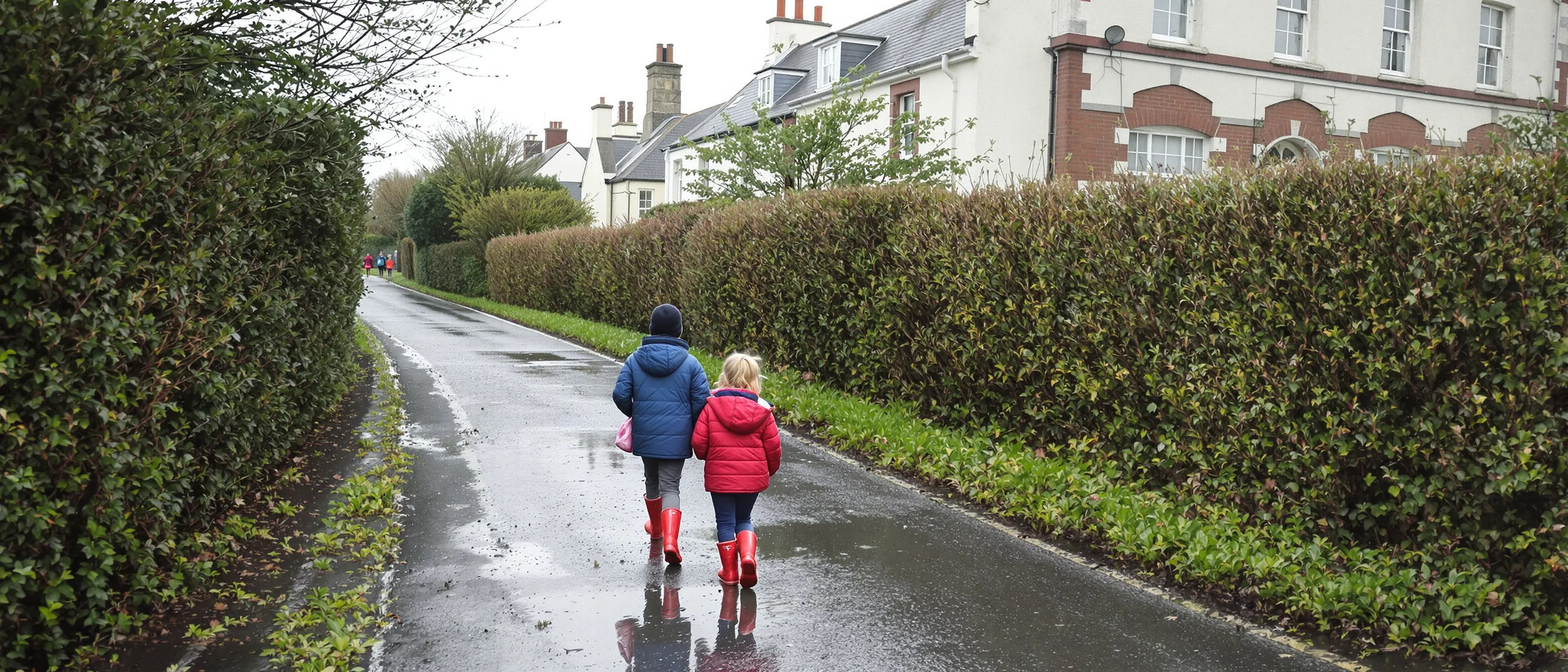
On every other subject on this site you can do the sums: prices, taxes, deadlines. With the children you do not calculate, you weigh. Are we tearing them out of their lives? Will they lose a school year, their friends, their footing? That is the question that keeps families awake at night, long before they search for a tax rate, and that is why this is the pillar the whole plan hangs on.
Your children do not start from zero
The most important difference between Ireland and almost every other destination fits in one sentence: children here are taught in English. A child from Britain simply carries on in its own language. A child from Scandinavia or the Low Countries does not walk into a classroom whose language it has never heard, but into one it already knows from school, from films and from games. The beginning is still work for that child, and the page on English at school describes the transition honestly. But it is a start halfway up, not from zero.
And what comes out of it stays: a child with a few years of Irish school behind it speaks the world’s language like a second mother tongue. Of everything you could take home from Ireland, that is the most valuable thing, and it fits into any path your child takes later in life.
And there is something else that belongs to the school question and appears in no statistic: in Ireland the school belongs to the town, the club to the parish, and through the children the whole family arrives. Smaller state, closer community.
Both paths are open
Ireland is one of the few countries in Europe where your family truly decides the education question for itself. One path: state schools that teach in English, are free and work; how the system is built is shown on the page about the school system, and the most common worry of families from abroad is answered on the page about Catholic schools. The other path: home education as a constitutional right, with a set procedure behind it, described on the homeschooling page.
And two items that take real cost out of Irish family life. Schoolbooks are free, at state-funded primary schools and at secondary schools alike, together with copybooks, dictionaries, maths sets and calculators. The school buys them and hands them out; no deposit is asked.
And a visit to the GP costs nothing for children under eight. The GP visit card for children under eight comes without a means test, whatever the parents earn. How the rest of the health system works is set out on the everyday life pages.
Source: Citizens Information, Free schoolbooks (Primary and Post-primary Schoolbooks Scheme) and GP visit cards. As of: checked again 17 September 2026.
This site makes neither path an ideology. Most families we work with send their children to school; some teach at home; a few do first one and then the other. The point is not which path is right. The point is that in Ireland you decide, not an education authority.
My own children went to school here
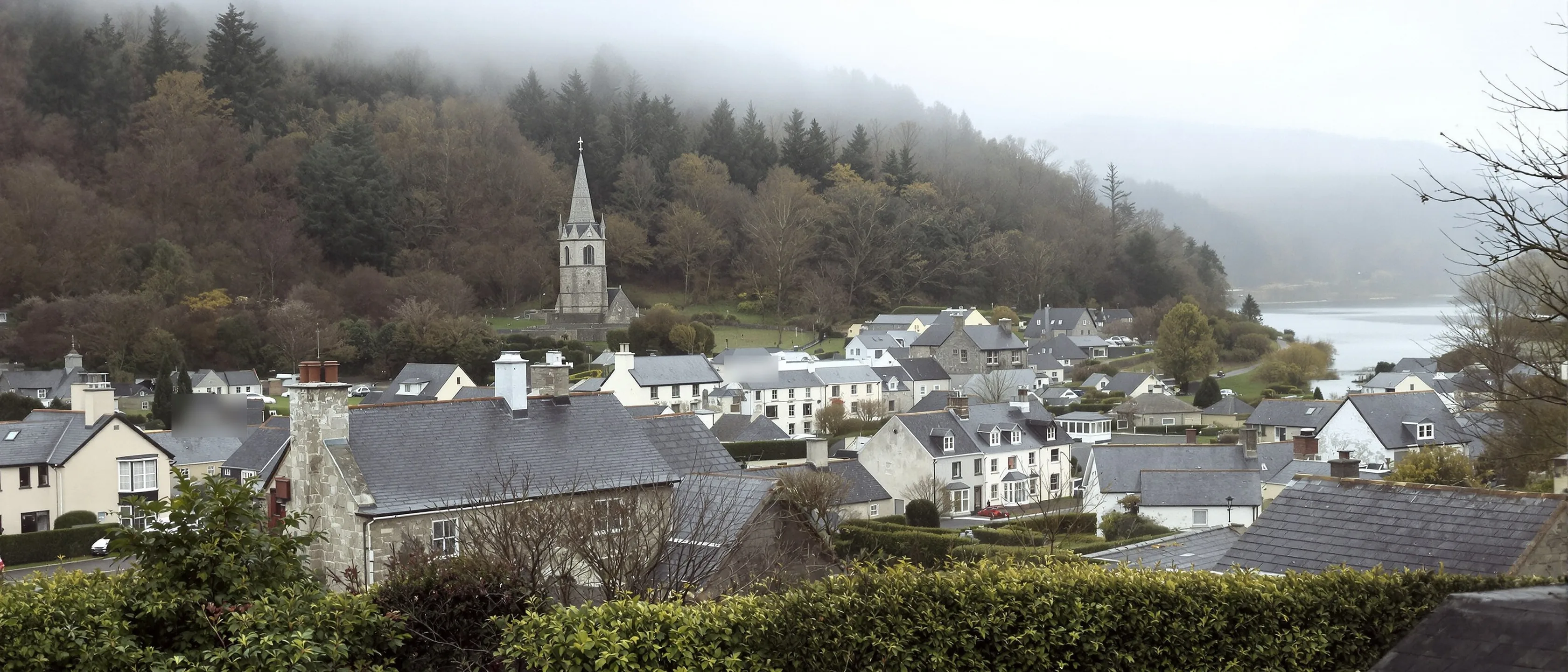
I do not write this pillar as an observer. In August 2014 I moved with six children to Lismore in County Waterford, a town of fewer than a thousand people. My children went to the local schools there, and they got on well.
That, in one sentence, is my whole qualification for these pages, and it means more to me than any statistic: I have made the decision that keeps you awake at night myself, with more children than most families bring, and in a smaller place than you will probably choose. What came of it shaped my idea of where children grow up well, and exactly that idea stands behind the region of this site.
The concession: small means small
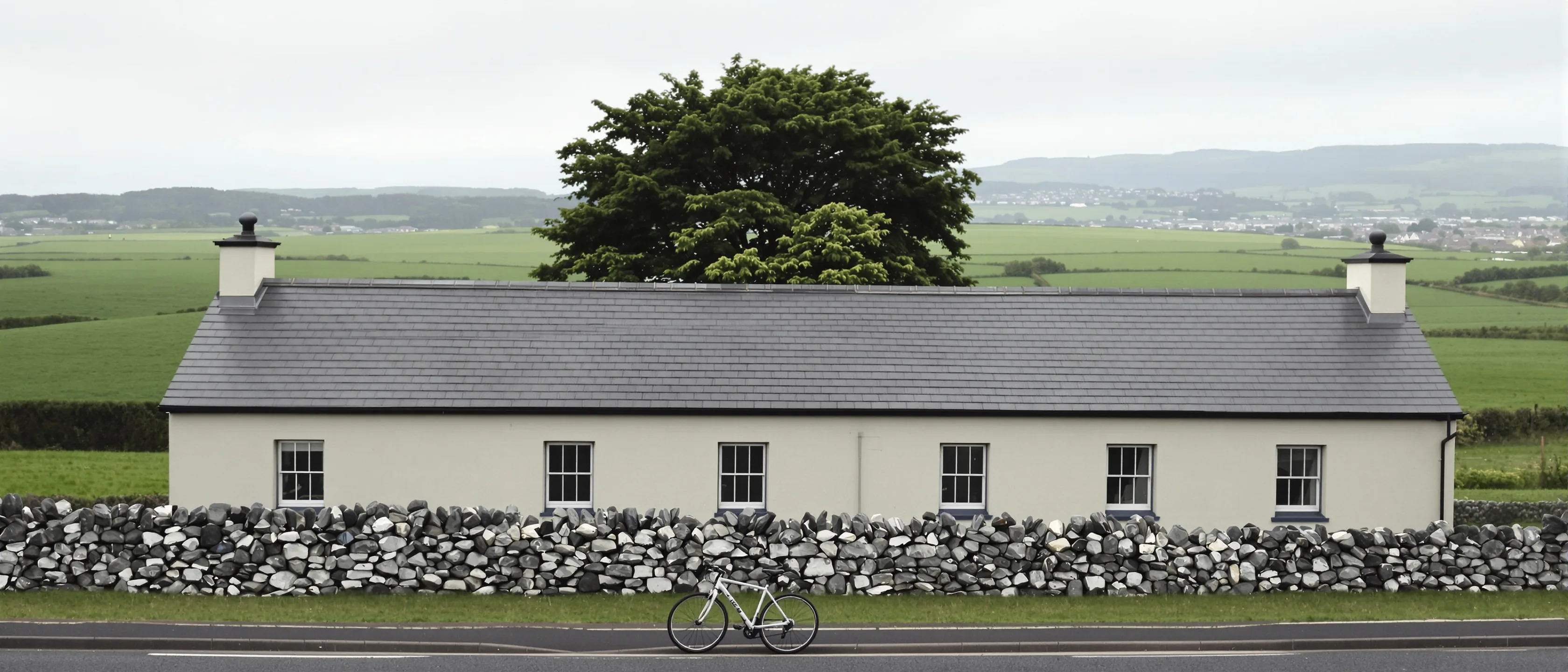
Before you read on, the concession this pillar owes you: the towns of this region are small towns, and small towns have small schools and little choice. There are not eight secondary schools to choose from, not every instrument is taught, not every sport is coached, and for some things you drive to the next town. If your child needs what a city of millions offers, you will not be happy here, and it would be dishonest to claim otherwise.
What a small school can do in return: your child is somebody there. It does not disappear into a year group of two hundred, the teacher knows its name in the first week, and settling in happens almost by itself through the school gate and the sports club. Small is the price, and small is also the product. Both are true, and you should know both before you go.
In depth
The pages in detail
The school system
Eight years of primary school, the Junior Cycle and the Leaving Certificate: how school is built and how enrolment works.
English at school
What it means for a child to be taught in English, with the exemption from Irish.
Catholic schools
More than 88 per cent of primary schools have a Catholic patron. What that means and what else the region offers.
Childcare
Two free preschool years, the weekly rates in the region and the state subsidy.
Family benefits
Child Benefit, Parent’s Benefit, Maternity and Paternity Benefit and the GP visit card for children.
Moving with children
When in the school year to move, the first weeks and how children find their feet in a small town.
Homeschooling
In Ireland a constitutional right with a register behind it. The law, the procedure and the question of exams.
Ask someone who lives there
Marc tells you what a price really means in your area, which school suits your family and in which order to tackle things. You take the steps yourself.