When one of the children falls ill: how well does Ireland’s health system work?
Ireland has good medicine and, at the same time, well-known waiting lists. We explain public care, private insurance, costs and what families can expect in practice after they arrive.
How the Irish system works
Access to the public system (HSE) depends on residence, not on contributions: anyone who is “ordinarily resident”, meaning they live in the country intending to stay at least a year, has access to public services. As a family from Britain, the Nordics or the Benelux you are therefore in the system from your first day, with no joining procedure and no wait for an insurance status. The question before that, who covers you once you leave home, is answered on its own page, Health cover when you leave; for British readers, GOV.UK notes that people receiving a UK State Pension can, in some cases, have their Irish healthcare paid for by the UK.
The second ground rule: the family doctor (GP) is the front door. You reach a consultant and the public outpatient clinic through the GP’s referral, and with a referral the public outpatient appointment is free. Very little works in Ireland without a GP, so registering with a practice is one of the first steps after you arrive, not one of the last.
What a visit to the doctor costs
Without a card you pay the GP directly: typically €50 to €70 a visit. There is no official register of fees, every practice sets its own; the figure comes from press reporting, and we label it as such. Children under 8 are free at the GP, with no means test at all.
The emergency department costs €100 if you come without a referral, and nothing if you have a GP’s referral letter or a Medical Card. The smaller injury units charge €75, on the same logic. The former daily charges for public hospital stays were abolished on 17 April 2023: a public inpatient stay now costs nothing. For medicines, the Drugs Payment Scheme caps what a household spends at €80 a month; registering is enough.
| Service | Cost |
|---|---|
| GP visit (secondary figure, no official register) | €50 to €70 |
| GP for children under 8 | €0 |
| Emergency department without referral | €100 |
| Emergency department with referral letter | €0 |
| Public inpatient care (since 17 April 2023) | €0 |
| Medicines per household and month, at most | €80 |
Source: Citizens Information, Drugs Payment Scheme (as of 13 October 2026) and Hospital charges (as of 1 August 2026); Health Insurance Authority (average premium, Market Bulletin Q2 2026); GP fees have no official register, secondary source RTÉ, 28 March 2025. As of: charges checked 2 November 2026, average premium 23 October 2026.
Medical Card and GP Visit Card
Ireland has two cards, both means-tested, both regardless of nationality. The Medical Card makes practically everything free, but its limits are so low that a family with capital will as a rule not qualify: €266.50 net a week for a couple, plus €38 per child. For savings, €36,000 per single person or €72,000 per couple is disregarded, and the family home does not count. The GP Visit Card, which only makes GP visits free, goes further: €607 net a week for a couple.
We put this plainly so you plan correctly: as a family with assets, do not count on the cards. Plan doctors’ costs as what they are here, a manageable item you pay yourself, with capped medicines and free care for children under 8.
From seventy, a different scheme applies, and it is far more generous. The test then runs on gross instead of net income, and the limits are much higher: a couple where one partner is 70 or older gets the Medical Card with a joint gross income of up to €1,050 a week, the GP Visit Card up to €1,400. For a single person the Medical Card limit is €550.
And two groups get the GP Visit Card with no means test at all: children under 8 and everyone aged 70 or over. For a family with young children that means: a visit to the GP costs nothing for the children, whatever the parents earn.
Source: HSE, Over 70s medical card; Citizens Information, GP visit cards. As of: checked 17 September 2026.
| Household | Medical Card | GP Visit Card |
|---|---|---|
| Single person living alone | €184 | €418 |
| Couple (also single parents) | €266.50 | €607 |
| Addition for 1st and 2nd child | €38 | €57 |
| Addition from the third child | €41 | €61.50 |
Source: Citizens Information, Medical card means test under 70s and GP visit cards, as of 16 July 2026. As of: retrieved 23 August 2026.
Private health insurance

Around half of the Irish also take out private insurance, above all to get past the public waiting lists. The market is tightly regulated: anyone may join (open enrolment), nobody may be dropped because of age or illness (lifetime cover), and everyone pays the same premium for a given plan, however old or ill (community rating). The insurers are VHI, Laya, Irish Life Health and, since the end of 2024, Level Health. An adult premium averages €1,950 a year across the market (Q2 2026).
For you as a newcomer there is a deadline here that hardly anyone knows and that is worth real money: anyone over 34 when they first join normally pays a loading of 2 per cent for each year above that, for up to 10 years. The loading falls away entirely if you take out cover within 9 months of moving. The deadline only affects people who move aged 35 or older; anyone younger pays no loading anyway. Miss the deadline and you pay the loading for ten years. So put private insurance on the list for the first months, not on the list for later.
Waiting periods and pre-existing conditions
Open enrolment means every insurer has to accept you. It does not mean it pays for everything from day one. For new customers it may set waiting periods, and the law caps them: none for accidents and injuries, at most 26 weeks for illnesses that start after cover begins, at most 5 years for pre-existing conditions, and at most 52 weeks for pregnancy and birth. Many insurers stay below these limits; what a given plan provides is in its terms.
Three rules help with the transition. A child added to cover within 13 weeks of birth or adoption serves no waiting periods. Anyone who switches insurer with a gap of no more than 13 weeks without cover takes the waiting periods already served with them. And the Health Insurance Authority gives no credit for years insured abroad, whether privately in Britain or with a Nordic or Dutch insurer; some insurers waive waiting periods voluntarily for certain previous cover abroad, but there is no right to that. If you arrive with a pre-existing condition, keep your cover at home until the Irish policy pays for that condition, or plan the switch so that there is no gap in between. If your care at home has been the NHS alone, plan for the full waiting periods.
You can compare the plans yourself with the official comparison of the Health Insurance Authority, the state regulator of private health insurers. The insurers with open membership are Irish Life Health, Laya Healthcare, Level Health, Vhi Healthcare.
Chronic illness and tax
For 16 chronic conditions the state pays the medicines and appliances in full through the Long-Term Illness Scheme, with no means test and no prescription charge. The list includes diabetes mellitus, epilepsy, multiple sclerosis, Parkinson’s disease, cystic fibrosis, haemophilia and spina bifida. The card covers only the treatment for that one condition, not the GP and not other medicines. The application is signed by a doctor in Ireland, so for anyone with a chronic illness, registering with a practice comes at the very start. All other medicines fall under the Drugs Payment Scheme with its cap per household.
What you pay yourself for the GP, consultants, physiotherapy or medicines that are not refunded, tax gives you partly back: 20 per cent of the cost, and for nursing home fees up to the top rate of 40 per cent. Routine dental and eye care are excluded, as is anything an insurer has refunded. The old paper form no longer exists: you enter the costs in Revenue myAccount, as an employee during the year, and you have 4 years to do so. Keep the receipts.
Source: Citizens Information, Long-Term Illness Scheme and Drugs Payment Scheme (each page edited 13 October 2026); Revenue, Health expenses (published 12 June 2026); Health Insurance Authority, Waiting periods, Moving to Ireland and FAQ (no page date). As of: retrieved 6 November 2026.
Private insurance, the Long-Term Illness Scheme, the Drugs Payment Scheme and the tax refund come together in the Health and HSE package Ireland, €2,900.
The waiting lists, named openly
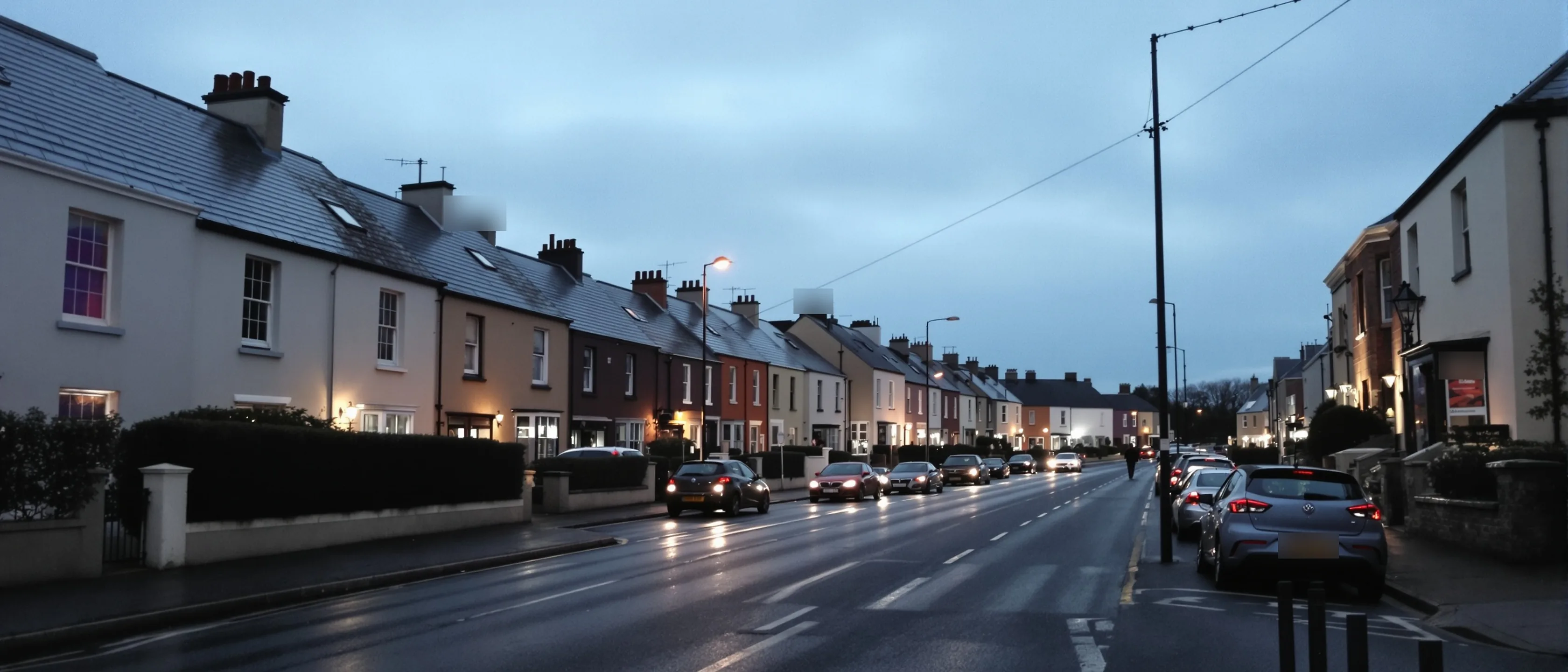
The weakness of the Irish system is no secret, and we do not treat it as one: in September 2026, 692,524 people nationwide were waiting for a first appointment at a public outpatient clinic, and 114,722 for inpatient treatment or a day-case procedure. At University Hospital Waterford alone, 50,700 people were waiting for a first outpatient appointment and 6,156 for inpatient treatment or a day-case procedure (September 2026).
That is exactly why private insurance in Ireland is standard equipment for a family with means, and exactly why it sits directly above this section. Planned procedures then go private; emergencies go through the emergency department anyway, whatever your insurance status.
| List | Waiting |
|---|---|
| First outpatient appointment, nationwide (September 2026) | 692,524 |
| Inpatient/day case, nationwide (September 2026) | 114,722 |
| University Hospital Waterford, first outpatient appointment (September 2026) | 50,700 |
| University Hospital Waterford, inpatient/day case (September 2026) | 6,156 |
Source: NTPF, National Public Hospital Waiting List September 2026 (published 9 October 2026); hospital figures: NTPF Open Data, Outpatient and Inpatient/Day Case by hospital, census date 24 September 2026. As of: retrieved 2 November 2026.
Doctors and hospitals in the region
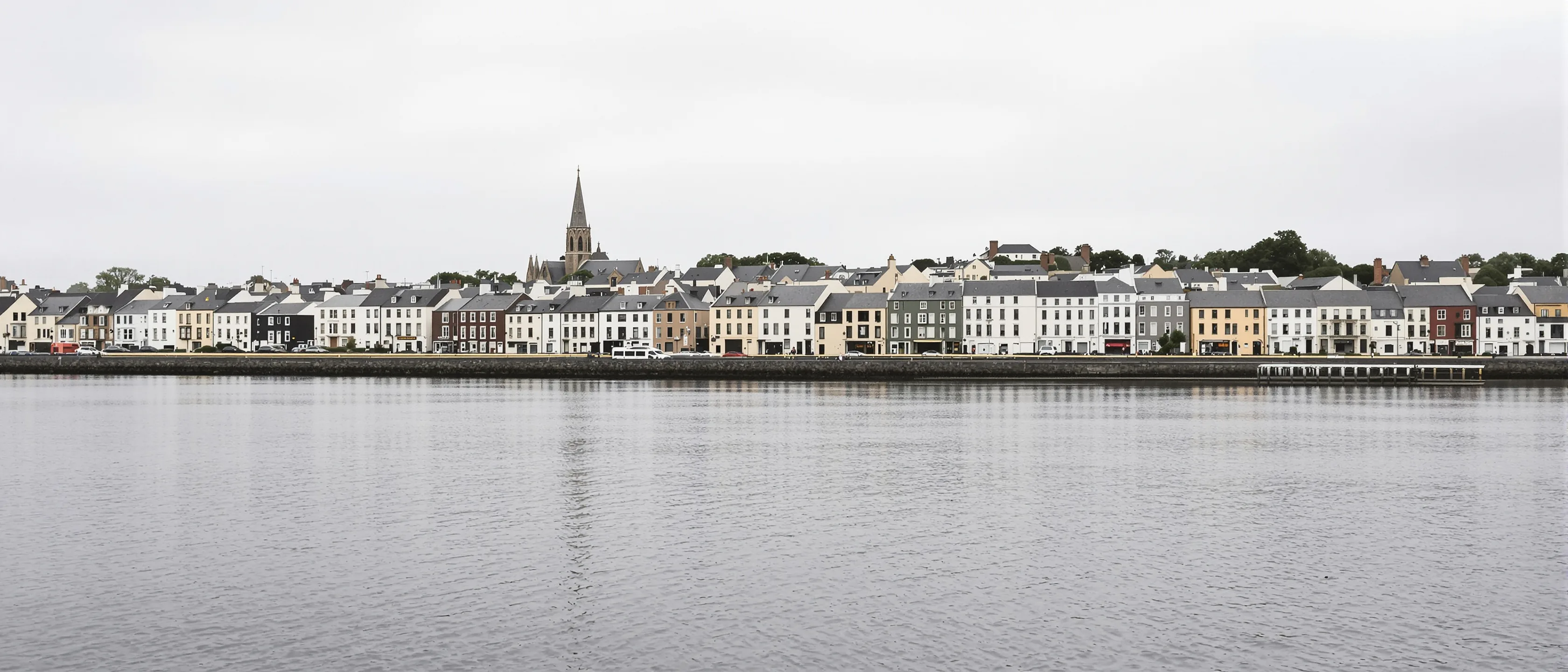
Two hospitals with an emergency department lie in the south-east: University Hospital Waterford and Wexford General Hospital, both for patients of every age. The hospitals in Cork city add to them for the west of the region. We deliberately give no bed numbers here: we found no current official count per hospital, and an outdated figure would be worse than none.
And the honest footnote on country life: GPs are scarce in Ireland, and scarcest in the countryside, as the GPs’ professional body says itself. Practices in small towns do not always take new patients. See to registering with a GP in the first weeks, ask several practices, and if you are torn between two places when buying a house, a practice that will take you is a better deciding factor than a finer view.
| Hospital | Town | Emergency department |
|---|---|---|
| University Hospital Waterford | Waterford | yes, for all age groups |
| Wexford General Hospital | Wexford | yes, for all age groups |
The hospitals in Cork city are not listed here.
Source: HSE, hospital and emergency department pages on hse.ie (University Hospital Waterford, Wexford General Hospital). As of: checked 2 November 2026.
Ask someone who lives there
Marc tells you what a price really means in your area, which school suits your family and in what order to tackle things. You take the steps yourself.