Irish weather: not as bad as you think. But yes, it rains.
The south-east is drier and sunnier than much of the island, and the climate stays mild all year. Here you get measurements instead of jokes about Irish weather.
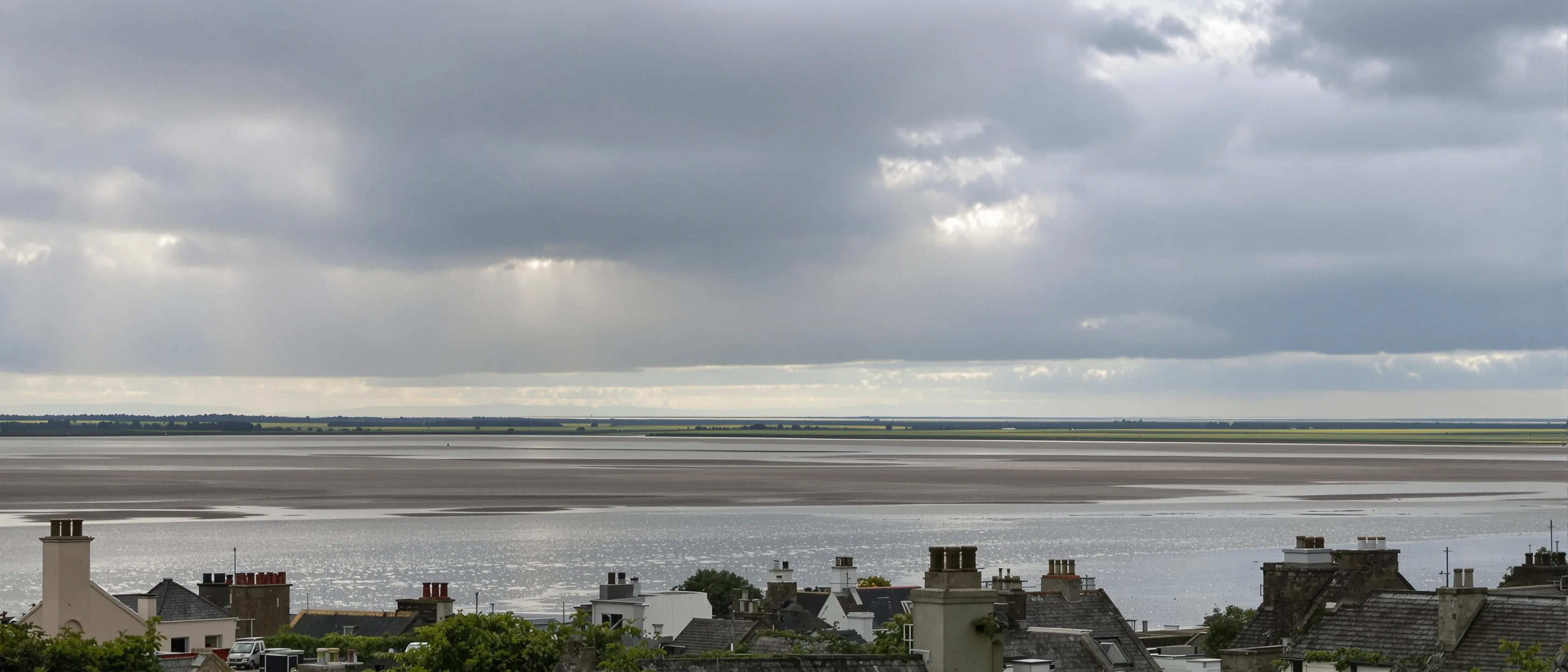
The region’s figures
First, a word of honesty about the data: the Rosslare weather station, the reference for the south-east coast, closed in 2008; its last complete normal period runs from 1978 to 2007. For the present, Johnstown Castle near Wexford and Cork Airport carry the records on. We give each figure its station and period instead of pretending there is a single value for the whole region.
| Measure | Rosslare (1978 to 2007) | Cork Airport (1991 to 2020) |
|---|---|---|
| Mean annual temperature | 10.6 °C | 10 °C |
| Daily maximum in July | 18.3 °C | 18.6 °C |
| Daily minimum in January | 4.2 °C | 3.2 °C |
| Sunshine per day, annual average | 4.3 hrs | 4 hrs |
| Rainfall per year | 905.5 mm | 1,239 mm |
| Rain days per year | 175 | 218 |
| Frost days per year | 4.8 | 14.5 |
Cork Airport lies at about 150 m; the East Cork coast is milder than the airport figures. Johnstown Castle near Wexford: 10.3 °C and 1,062.7 mm in the station’s long-term average.
Source: Met Éireann, station normals (Rosslare 1978 to 2007; Cork Airport 1991 to 2020; Dublin Airport 1991 to 2020; Johnstown Castle long-term station average). As of: retrieved 23 and 26 August 2026.
Summer
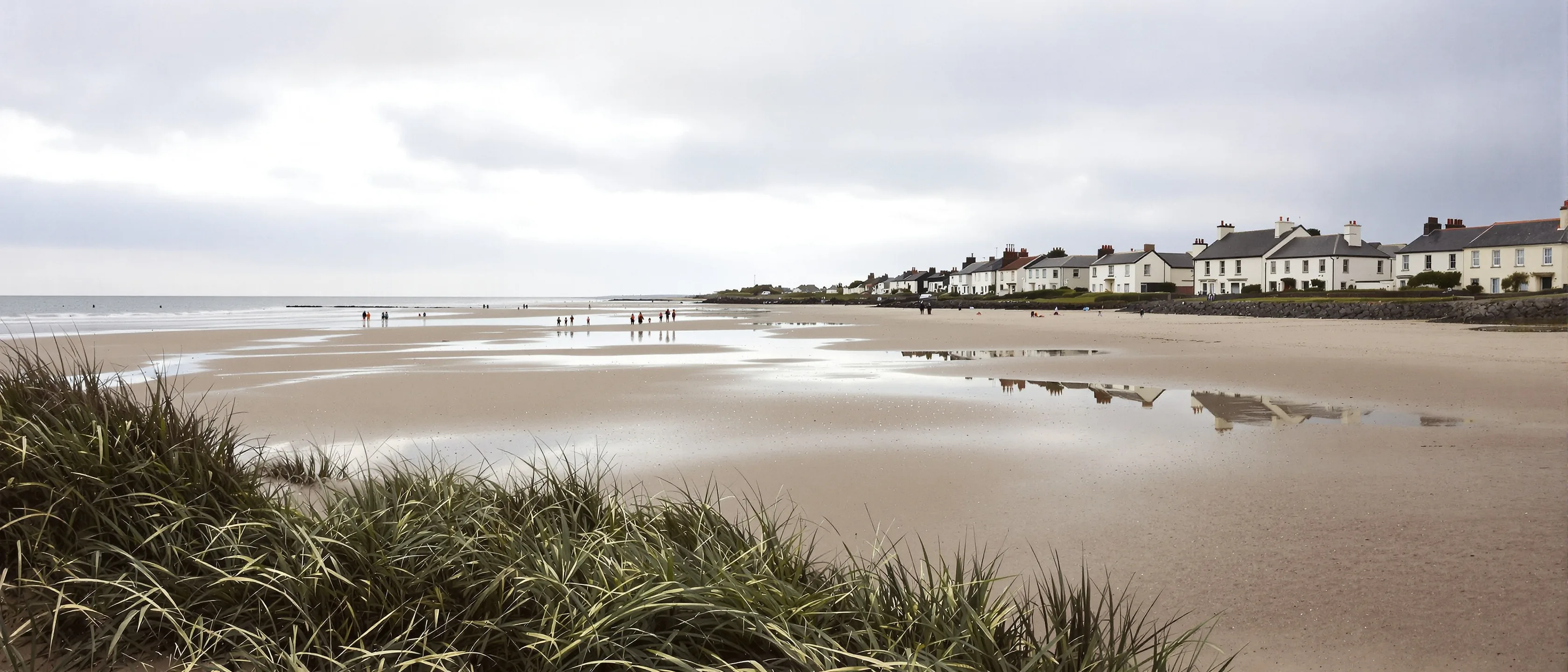
The Irish summer is mild, not hot, and anyone who reads that as a shortcoming has never been here in July. On the south-east coast the daily maximum is 18.3 degrees in July and 18.5 in August; the highest value ever measured at Rosslare was 26.2 degrees. Heatwaves, tropical nights and air conditioning do not feature in this summer. For children that means: the beach is an afternoon outing from May to September, not a long-haul destination.
If you are asking about the weather in August because the move falls in the summer holidays: expect 18.5 degrees by day, fresh evenings and the odd wet day in between. A moving day in August is more reliable here than one in January, but pack waterproof all the same.
Winter
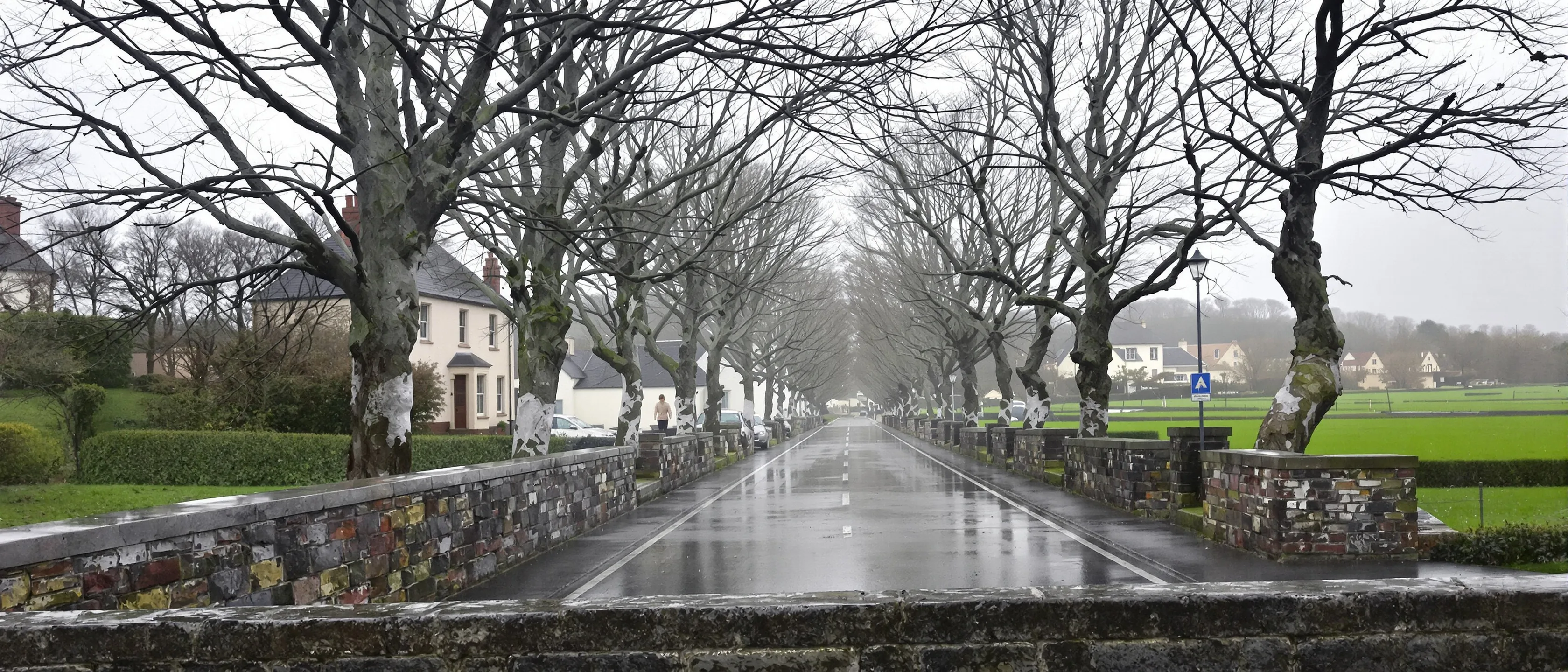
Winter is the region’s quietest advantage: mild, green and short. The January daily minimum on the coast is 4.2 degrees, there are on average only 4.8 frost days a year, and lying snow covers the ground on just 1.2 days. Winter tyres are no issue here, snow shovels neither, and the fields stay green.
The flip side: the days are short, it is often grey, and older houses are often poorly insulated; how to have a house’s condition checked before you buy is on the page on buying a house. Winter here costs fewer nerves on the road and more heating oil in the tank; what that means for running costs is on the page Cost of living.
Rain and the dry coast
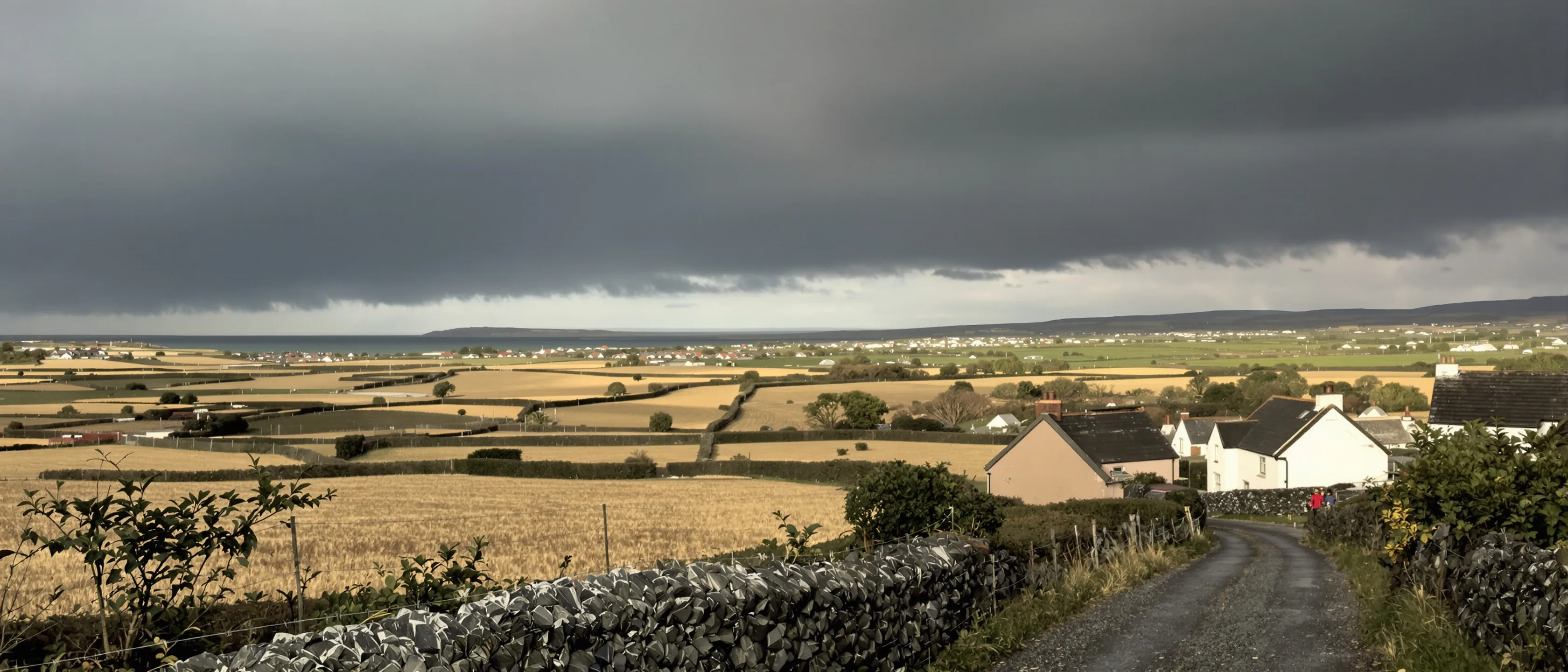
Yes, it rains in Ireland. The question is where and how much, and the answer redraws the map: Rosslare gets 905.5 millimetres a year, the national average is 1,288, and the west is well above that. The driest part is the east coast around Dublin (772.5 mm at Dublin Airport, normal period 1991 to 2020); the south-east is, with it, among the driest parts of the island, and within the region the coast stays drier than the inland areas.
| Place | mm/year |
|---|---|
| Rosslare Harbour | 880 |
| Bridgetown | 926 |
| Dunmore East | 928 |
| Rosslare Strand | 939 |
| Ardmore | 964 |
| Wexford | 993 |
| Tramore | 1,003 |
| Waterford | 1,008 |
| Enniscorthy | 1,025 |
| Gorey | 1,044 |
| New Ross | 1,077 |
| Dungarvan | 1,123 |
| Lismore | 1,186 |
| Kilmacthomas | 1,204 |
| Youghal | 1,037 |
| Mallow | 1,067 |
| Fermoy | 1,073 |
| Cobh | 1,085 |
| Cork | 1,088 |
| Midleton | 1,107 |
| Carrigaline | 1,168 |
| Kinsale | 1,185 |
For comparison: Ireland on average 1,288 mm, Galway 1,285 mm, Westport 1,453 mm, Killarney 1,510 mm.
Source: Met Éireann, long-term averages 1991 to 2020, 1 km grid. As of: retrieved 22 and 23 August 2026.
And the rhythm matters more than the total: on 175 days a year measurable rain falls on the coast, but seldom for long at a stretch. The typical rain is a shower that passes through, not a day that is lost. Nobody plans anything “weatherproof” here; you take a jacket.
Sunshine
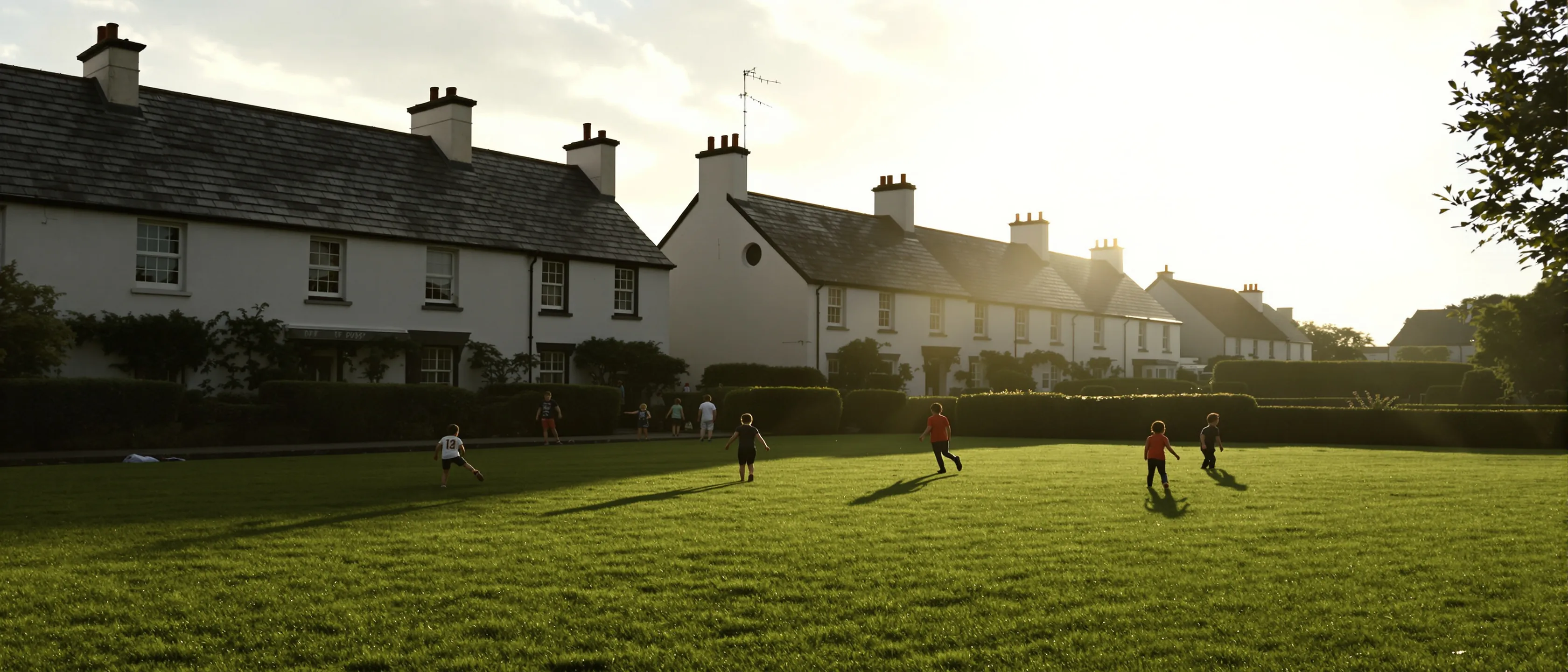
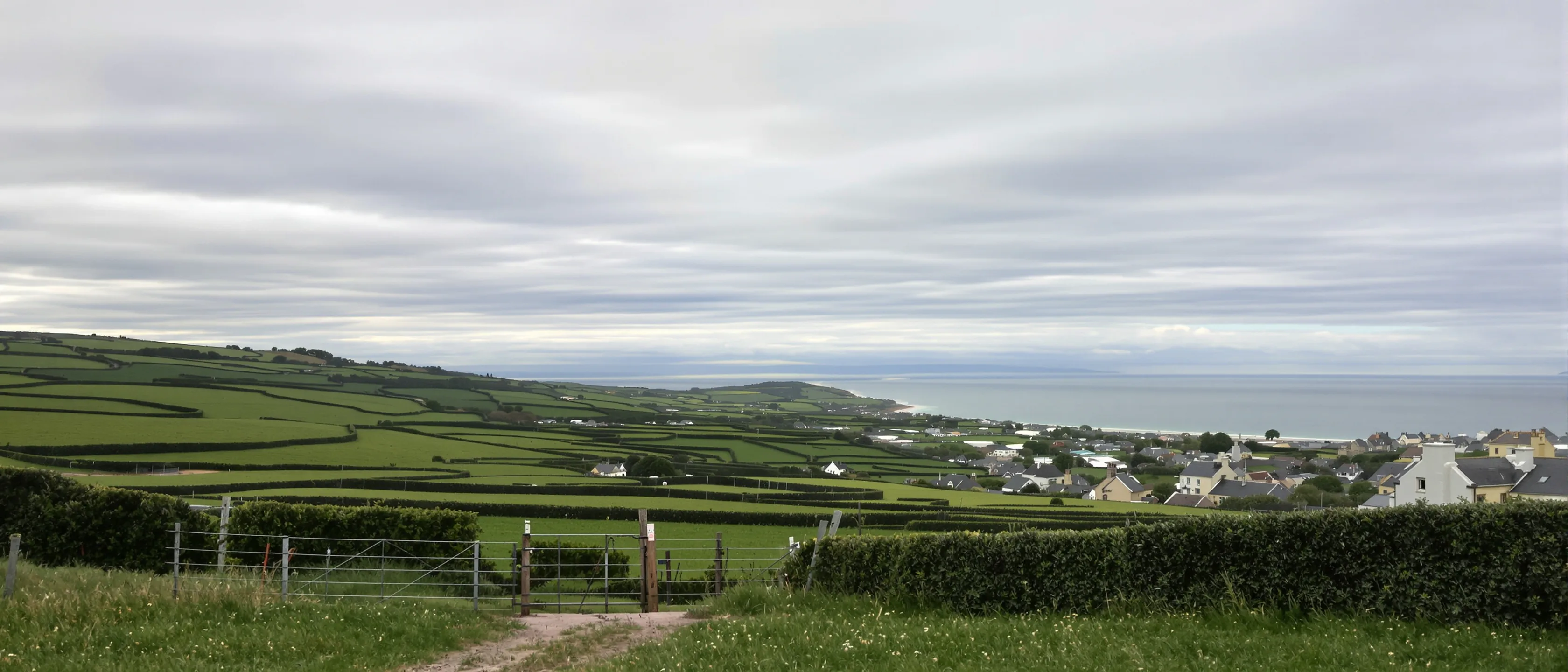
The line is not ours but Met Éireann’s own: the far south-east gets the most sunshine in the country, on average more than seven hours a day in early summer. Across the year the coast has 4.3 hours a day, in summer 6.1. The Irish call County Wexford the “sunny southeast”, and the records bear them out.
Add the length of summer days at this latitude: in June it gets light early and only dark after ten in the evening. The evening light after school is one of the reasons children’s lives here happen outdoors.
Storms, named openly
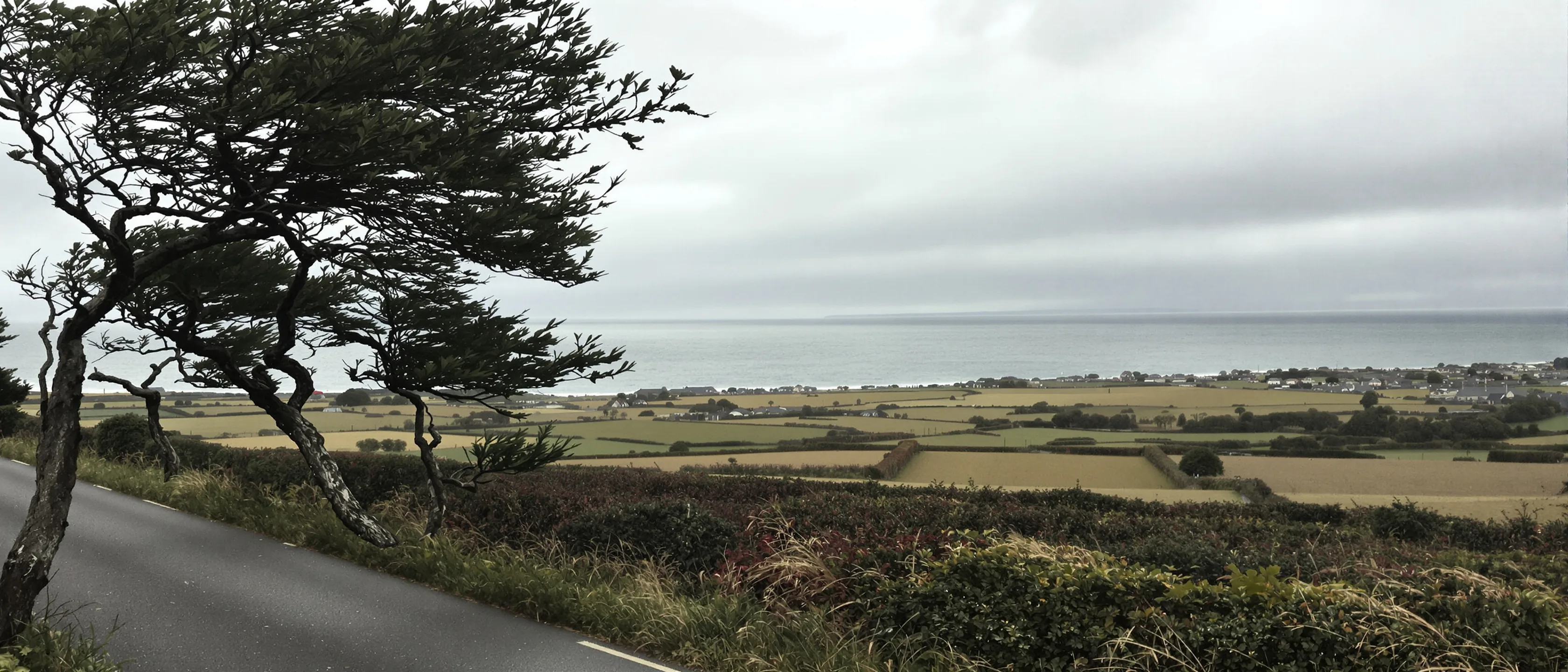
What we do not hide: Ireland sits in Atlantic weather, and winter brings named storms. The south-east coast averages 7.1 gale days a year. Met Éireann names the storms together with the weather services of the United Kingdom and the Netherlands and warns in three levels: yellow, orange, red. A red storm means schools close, ferries stay in port, and now and then the power goes, more often in the country than in town.
That is part of the truth about life here, and at the same time it is something you can plan for: the warnings come days ahead, the houses are built for wind, and for most families a storm day a year with candles and a fire belongs in the category of memories rather than disasters.
Ask someone who lives there
Marc tells you what a price really means in your area, which school suits your family and in what order to tackle things. You take the steps yourself.