How safe is Ireland’s south-east?
Crime figures are one thing. How a town feels in the evening is another. Here you get both: official data and a realistic picture of small-town life.
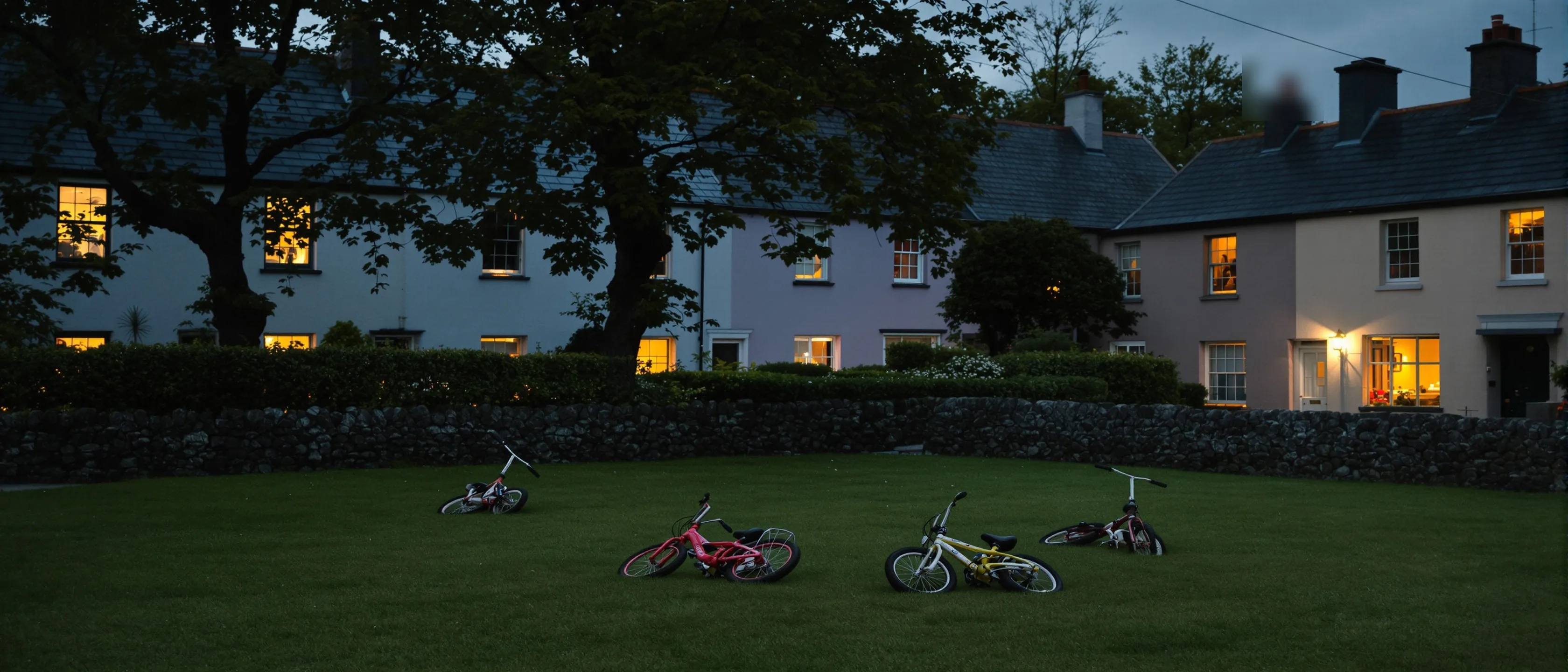
For families, safety is seldom the first question and almost always the one behind it. There are two poor ways to answer it: the brochure in which nothing ever happens, and the scare page that lives off single cases. This page tries a third: first the official figures, then everyday life, then the limits of what can honestly be said.
The official figures
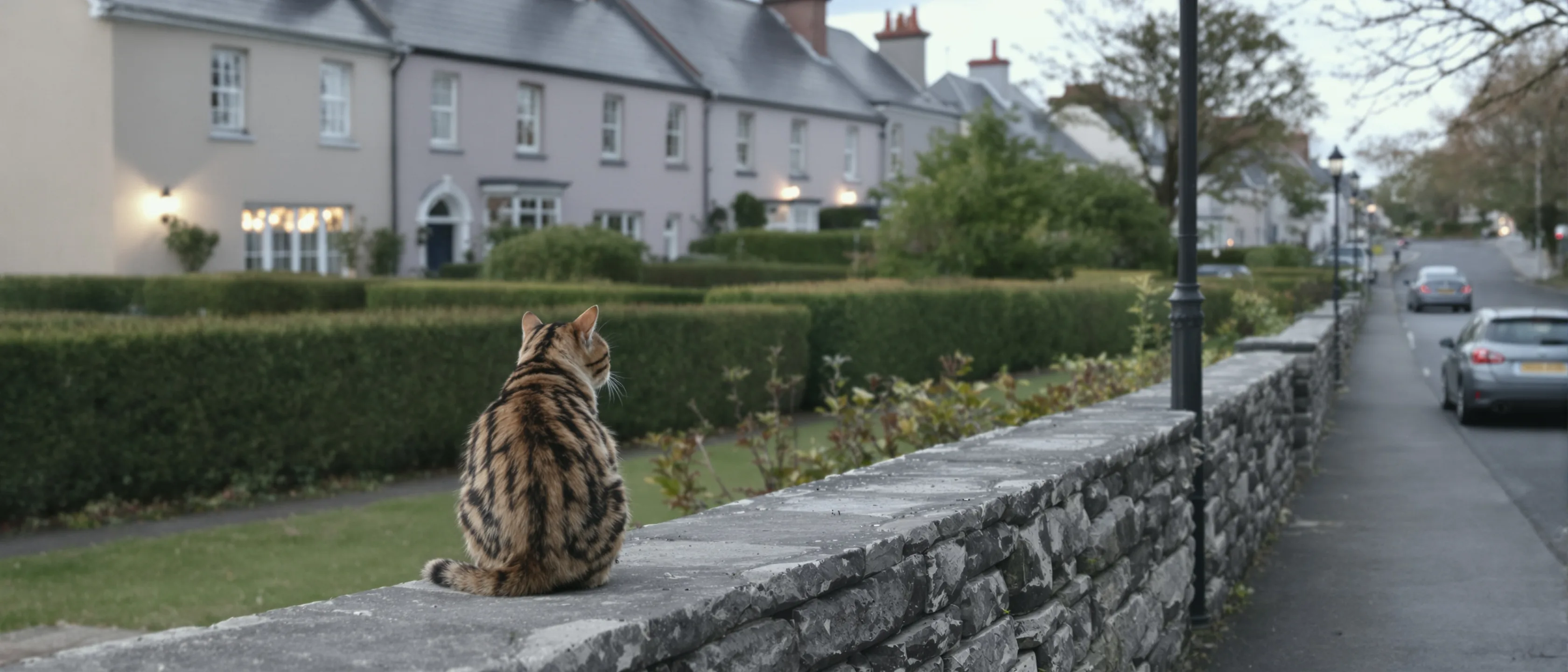
The Irish statistics office, the CSO, publishes recorded crime every quarter. The latest annual figures say: recorded crime fell in 2025 in most offence groups compared with 2024.
| Offence group | Change |
|---|---|
| Homicide and related offences | -25% |
| Kidnapping and related offences | -21% |
| Burglary and related offences | -13% |
| Robbery, extortion and hijacking offences | -11% |
| Weapons and explosives offences | +6% |
Cases recorded by the police, An Garda Síochána; like every police statistic, it also measures how often people report.
Source: CSO, Recorded Crime Q4 2025, Key Findings (published 26 March 2026). As of: retrieved 23 August 2026.
A quarterly statistic makes no country safe or unsafe; it shows direction and scale. The direction in 2025 points downwards in the serious offence groups, and that matches the picture this site draws elsewhere too: on the safe harbour overview, low crime stands as part of the overall sum, expressly as an assessment, not a guarantee.
A police force that is usually unarmed
A detail that matters more in daily life than any statistic: most Gardaí carry no firearm on duty. There are armed units and individual officers authorised to carry, but the patrol officers you meet on the street are unarmed. That shapes the tone between police and public. Readers from England and Wales will recognise it: there, too, only about one officer in twenty-five is an operationally deployable armed officer, according to the Home Office’s figures for March 2026.
So that this does not stay half a picture: in December 2025 a trial of Tasers for uniformed Gardaí began, at first in the Dublin stations of Store Street, Pearse Street and Kevin Street and in Waterford. In June 2026 it was extended to the end of 2026, and since July 2026 it has also run in Limerick. Every use is recorded. The equipment of the Irish police is not set in stone, then; it is moving, and it is moving towards more equipment, not less.
Source: Citizens Information, An Garda Síochána, the national police force; An Garda Síochána, press releases of 14 June and 24 July 2026; Home Office, Police use of firearms statistics, April 2025 to March 2026 (2 July 2026). As of: checked 23 October 2026, Home Office figures 6 November 2026.
Everyday life in a small town
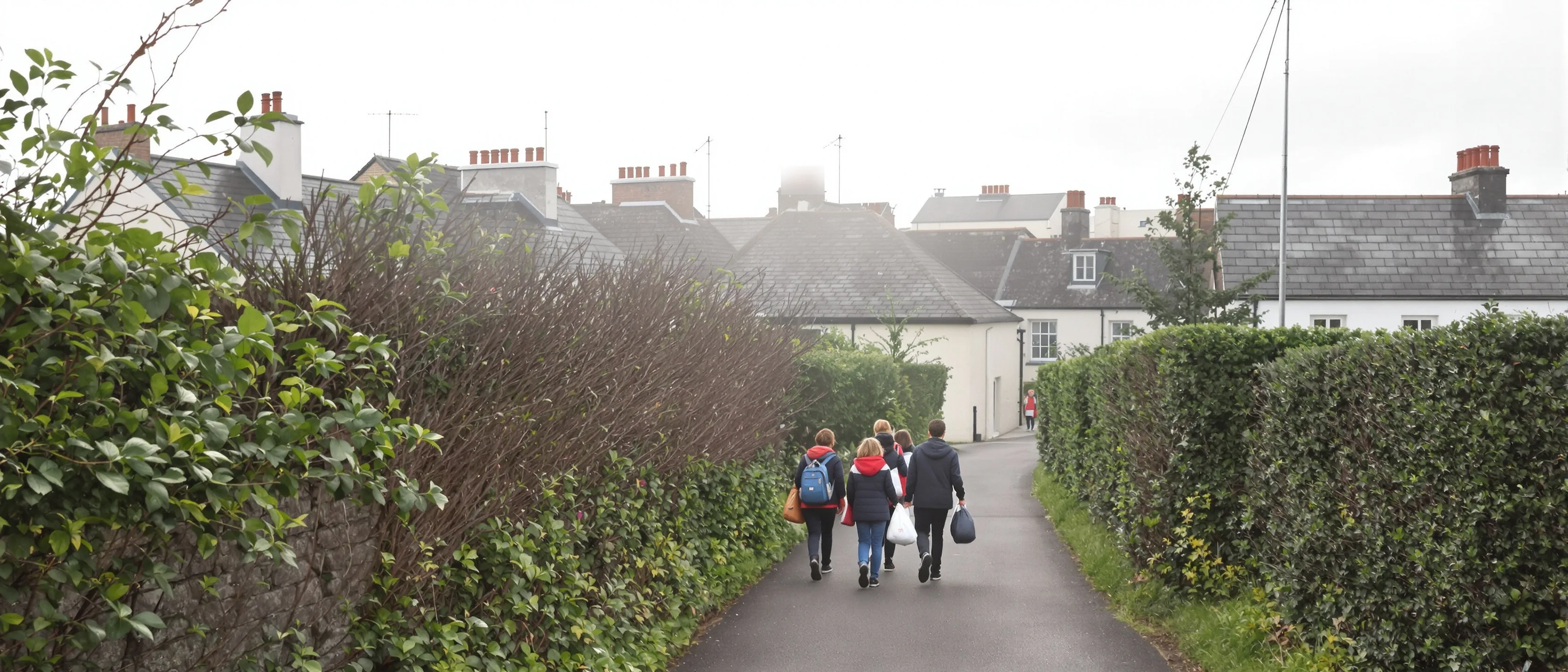
Statistics are one thing, lived everyday life another. Everyday life in this region plays out in towns of eight to twenty thousand people, and small towns have a mechanism of their own when it comes to safety: people know each other, strangers are noticed, children walk to school and to training in groups, and the social control a big city lacks does part of the work here with no police at all.
That does not mean nothing happens. Irish small towns know theft, vandalism and the problems teenagers have everywhere, and a remote country house, of the kind many find tempting when buying a house, calls for the same care as anywhere in the countryside: lock up, light up, know your neighbours. Anyone coming from a British market town or a small Dutch or Danish town will find the scale familiar; anyone coming from a big city will notice one thing above all: how much more rarely safety comes up in conversation here at all.
What this page does not claim
Three things you will deliberately not find here. No international league table: the safety indices in circulation mix surveys and recorded data, and we quote no figure whose making we cannot check. No statement about individual towns in the region: we have not compiled a solid, source-checked breakdown by small town, and on this site unproven does not mean disproved, it means named openly. And no promise: safety is a situation, not a property, and situations change.
What remains is a sober sum: a country with falling recorded crime in the serious offence groups, a region of manageable towns with working neighbourhoods, and an everyday life in which children can get about on their own. For the larger security questions, from non-alignment to conscription, the safe harbour is the pillar to read.
More in Living
Ask someone who lives there
Marc tells you what a price really means in your area, which school suits your family and in what order to tackle things. You take the steps yourself.